Ancestral Kitchen Skills Every Parent Should Know
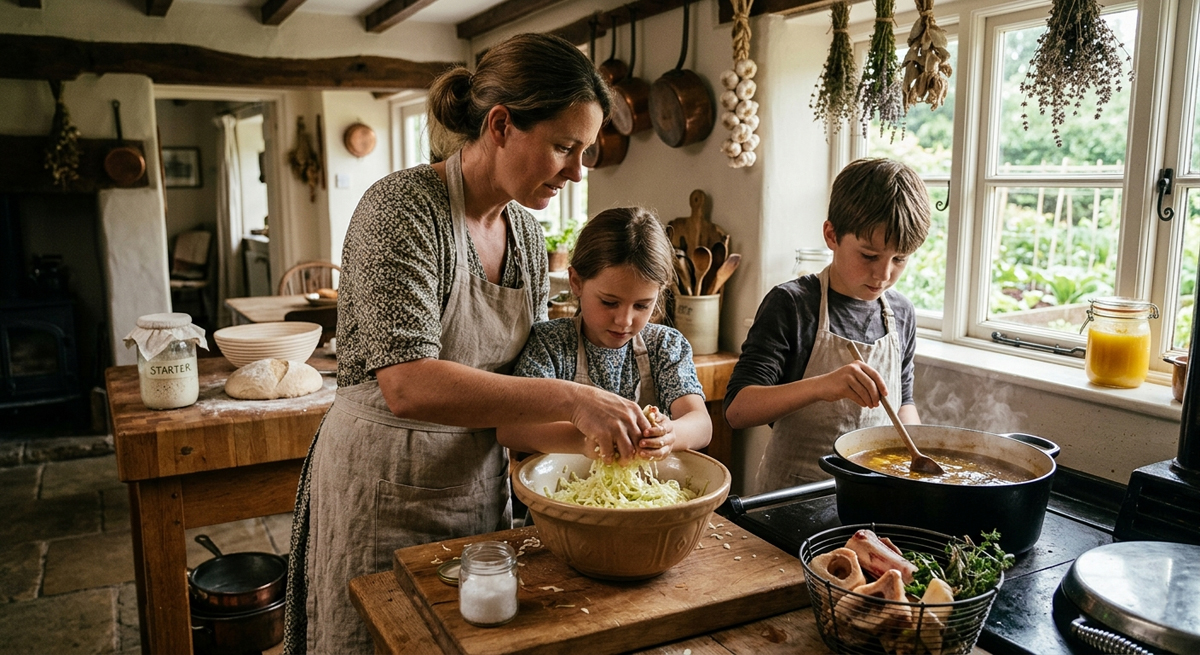
In an era of air fryers and two-minute mug cakes, the kitchen has become a place of high-speed convenience. But something vital gets lost in the hum of the microwave: the rhythmic, grounded connection to how our ancestors actually nourished themselves.
Teaching your children “ancestral” kitchen skills isn’t just about making dinner; it’s about passing down a biological inheritance of health, patience, and sensory wonder. Here are the essential skills to bring back to your family table.
1. The Alchemy of Fermentation
Before refrigeration, humanity relied on the “good” bacteria to preserve the harvest. Teaching a child how salt and cabbage transform into crunchy sauerkraut is like performing a slow-motion magic trick.
- Why it matters: It introduces kids to the microbiome and the idea that not all “germs” are bad.
- The Skill: Start with a simple “countertop ferment.” Let them massage the salt into the vegetables—it’s tactile, messy, and deeply satisfying.
2. Nose-to-Tail Broth Making
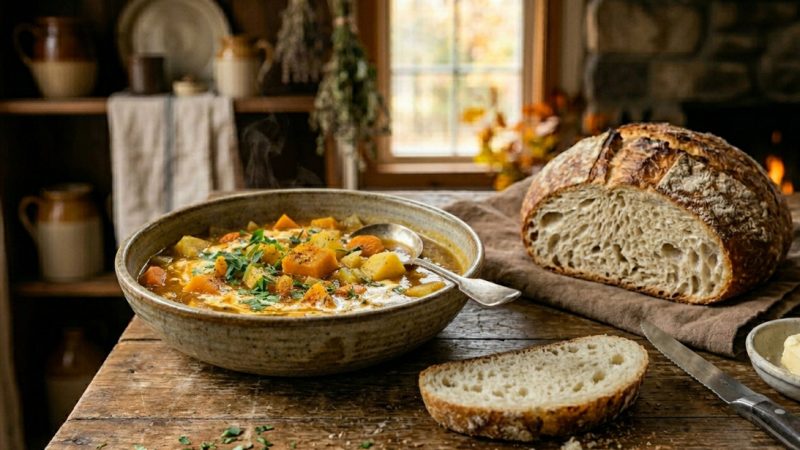
Our ancestors would never dream of tossing a chicken carcass or beef bones into the bin. Making “Liquid Gold” (bone broth) is the ultimate lesson in stewardship and nutrition.
- The Lesson: It teaches children that food doesn’t just come in plastic-wrapped fillets; it comes from an animal that deserves to be fully honored.
- The Secret: Keep a “scrap bag” in the freezer for onion skins, carrot tops, and celery ends. When the bag is full, it’s broth day.
3. Sourdough: The Living Heritage
Commercial yeast is a modern shortcut. For millennia, bread was risen using wild yeast captured from the very air in the kitchen.
- The Bond: A sourdough starter is essentially a “kitchen pet.” It requires feeding, warmth, and attention.
- The Science: Watching a flat piece of dough double in size due to invisible fungi is a primary lesson in the CO2 cycle and fermentation biology.
4. The Art of the Heirloom Fat
Long before seed oils filled our pantries, kitchens ran on butter, tallow, and lard. Knowing how to render fat or churn butter is a foundational skill that changes the flavor profile of everything you cook.+1
- Try this: Give your child a jar of heavy cream and tell them to shake it until it turns into a solid. The moment the buttermilk separates is pure discovery.
5. Sensory Seasoning (Throw Away the Measuring Spoon)
Ancestral cooking wasn’t dictated by a Pinterest recipe; it was guided by smell, sight, and taste.
- The Practice: Let your children smell the spices before they go into the pot. Ask them, “Does this smell ‘warm’ like cinnamon or ‘sharp’ like pepper?” * The Goal: You want to raise a cook who can fix a soup that’s too acidic by knowing instinctively to add a pinch of salt or a drop of honey.
Why These Skills Matter Today
“The kitchen is the heart of the home, but the hearth is the soul of the lineage.”
When we slow down to peel, stir, ferment, and roast, we aren’t just prepping a meal. We are reclaiming a pace of life that feels human. In a world of digital distractions, the tactile resistance of bread dough or the bubbling sound of a crock of pickles provides a “sensory anchor” for a child.
By teaching these skills, you aren’t just raising a kid who can feed themselves—you’re raising a guardian of tradition who knows exactly where they come from.
The Author:
Pioneerthinking.com: Ingredients for a Simple Life. Insights from a seasoned professional rooted in country living, with 28 years of horticulture expertise and over two decades of practical experience in homesteading, natural beauty and cosmetic creations, natural health, cooking and creative living.
Photo. Gemini