Cream of Mushroom Soup
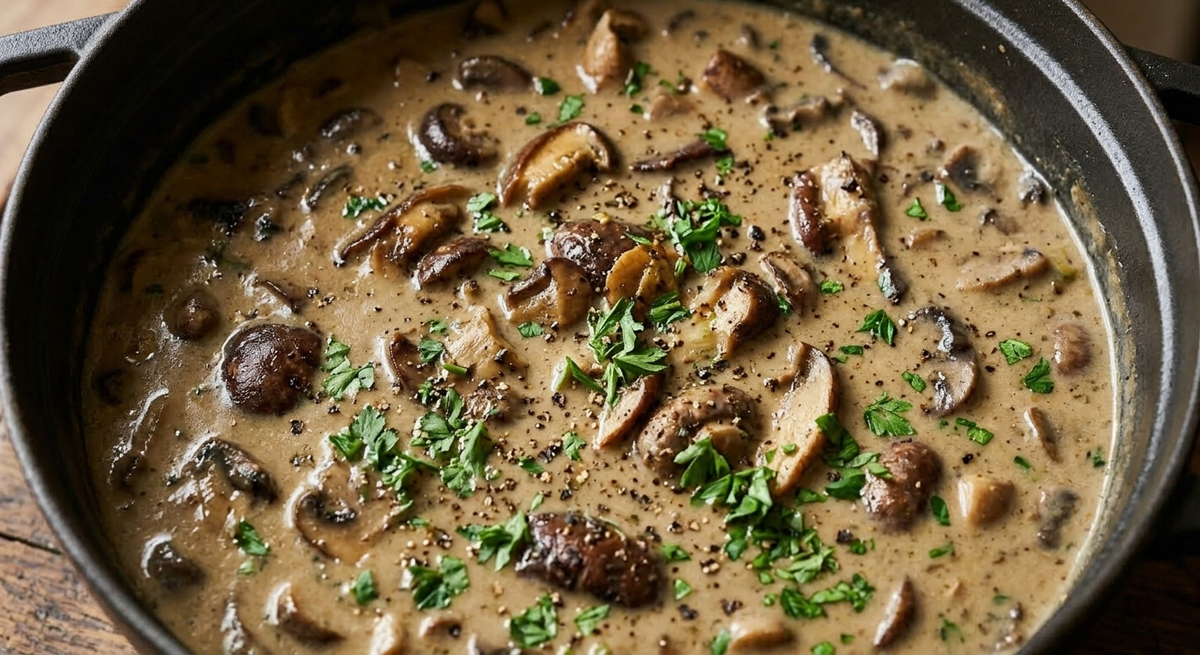
In the heritage kitchen, mushrooms are treated with a certain reverence. They are the “meat of the forest,” offering a deep, grounding umami that anchors a winter menu. This isn’t a quick, thin soup; it is a slow-built potage designed to nourish the body and soul during the transition from the damp woods of autumn to the hearth-fire of winter.
This recipe moves away from the “convenience” of standard cream soups. We use dry-searing to lock in flavor and cultured fats to provide a velvety mouthfeel that only true, whole ingredients can achieve.
Cream of Mushroom Soup
Prep time: 15 minutes | Cook time: 30 minutes | Yields: 6 servings
Ingredients:
- 1.5 lbs Mixed Mushrooms: (Crimini, Shiitake, and Oyster are best). Sliced thick for “bite.”1/4 cup Dried Porcini or Morels: Rehydrated in 1/2 cup warm water (This is the “High-Note” secret).
- 4 tbsp Cultured Butter: For a deeper, tangy fat profile.
- 1 Large Yellow Onion: Finely diced.
- 3 cloves Garlic: Smashed and minced.
- 1/4 cup Unbleached Flour: To build the roux.
- 4 cups Rich Bone Broth: (Chicken or Beef), preferably homemade.
- 1 cup Heavy Raw Cream: Or the highest-quality grass-fed cream available.
- Fresh Herbs: 2 tsp chopped Thyme and 1 tbsp Italian Parsley.
Directions:
1. Heat your Dutch oven over medium-high heat. Add the mushrooms to the dry pan first. Let them release their moisture and begin to brown before adding any fat. This concentrates their natural sugars. Once they begin to “squeak,” add 2 tbsp of the cultured butter and the onions.
2. Sauté until the onions are translucent and the mushrooms are deeply bronzed. Stir in the garlic, thyme, and the rehydrated wild mushrooms (finely chopped). Pour in the reserved soaking liquid from the dried mushrooms, being careful to leave any grit at the bottom of the bowl.
3. Move the vegetables to the sides of the pot. Melt the remaining 2 tbsp of butter in the center and whisk in the flour. Cook for 1-2 minutes until the flour smells nutty. Slowly pour in the bone broth, whisking constantly to ensure a smooth, clump-free body.
4. Lower the heat and let the soup bubble gently for 15 minutes. This allows the flavors of the forest to fully marry with the broth.
5. For a “Pioneer Texture,” use an immersion blender to puree only half of the soup. This leaves plenty of whole, meaty mushroom slices for a rustic feel. Stir in the heavy cream and let it heat through (do not boil). Season with salt and cracked black pepper.
Larder-Wise Tip: Prepping the Harvest
When working with mushrooms, never soak them in water. They are like sponges and will become rubbery. Instead, use a damp cloth or a soft-bristled “mushroom brush” to whisk away any earth. For Shiitakes, always remove the stems—they are too woody for the soup, but they make an excellent addition to your next batch of bone broth!
The Pioneer Perspective: Living by the Seasons
In the days of the early frontier, a pot of mushroom soup wasn’t just a culinary choice; it was a testament to a family’s resourcefulness. When the garden beds were tucked under a blanket of straw and the cellar stocks began to dwindle, the forest floor became the pioneer’s extended larder.
The Gift of the Woods: For a settler, the “meat of the forest” was a vital substitute during lean times. While we now reach for cultured butter and heavy cream with ease, a pioneer woman would have skimmed the yellow cream from the morning’s milking and used the rendered fat from the autumn butchering to create that rich, soul-warming base. Every ingredient had a story of labor behind it—from the hand-churned butter to the herbs dried over the rafters.
Waste Not, Want Not: Nothing was squandered in a pioneer kitchen. Those “woody” shiitake stems mentioned above? They wouldn’t just be a suggestion for the next broth; they were a necessity. In a world without grocery stores, the deep umami of the mushroom was a precious commodity that flavored everything from Sunday roasts to Monday’s weak gruel.
The Hearth as the Heart: The slow-building of flavors in a heavy iron pot over an open flame did more than just cook the food—it humidified the dry winter cabin and gathered the family around the warmth. Today, when we take the time to dry-sear our harvest and whisk a proper roux, we aren’t just making dinner. We are practicing the same patience and reverence for the land that kept our ancestors fed through the longest, coldest nights.
The Author:
Pioneerthinking.com: Ingredients for a Simple Life. Insights from a seasoned professional rooted in country living, with 28 years of horticulture expertise and over two decades of practical experience in homesteading, natural beauty and cosmetic creations, natural health, cooking and creative living.
Photo. Gemini