Beat the Bloom: Seasonal Conditioning for the Pioneer Home
In the heritage apothecary, we don’t wait for the symptoms of spring to arrive; we prepare the body as we prepare the soil. Managing seasonal sensitivities is a matter of building a “from-scratch” resilience using the very plants that grow around us.
1. The Power of Local Provenance
One of the most effective tools for seasonal conditioning is the harvest from your own local pollinators.
-
The Practice: Incorporating raw, local honey into your daily rhythm months before the bloom begins. By consuming trace amounts of local pollen gathered by bees in your specific area, you are essentially “mapping” your immune system to your environment.
2. The Green Tonic (Nettle Stewardship)
Stinging Nettle is the cornerstone of the spring apothecary.
-
The Horticultural Insight: As a professional horticulturist, I view Nettle not as a weed, but as a biological “reset” button. It is rich in minerals and acts as a natural antihistamine.
-
The Practice: Infuse dried or freshly harvested spring nettles into a daily tonic to stabilize the body’s response to the seasonal shift.
3. The Heritage Rinse (Botanical Steam)
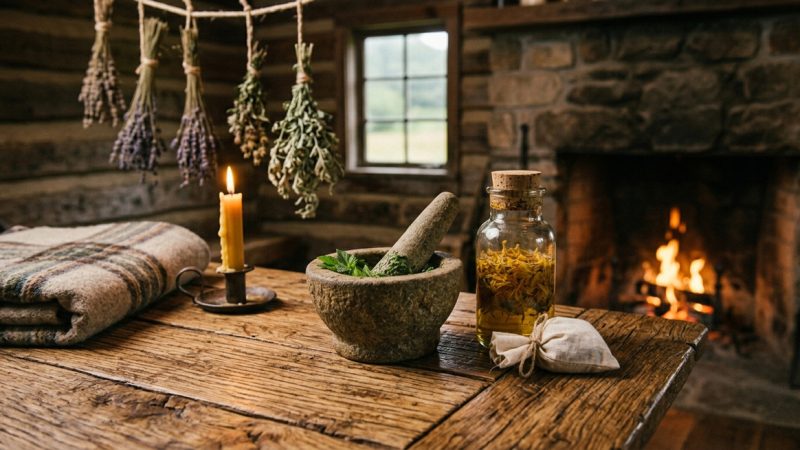
When the pollen count is high, we look to the “Physic Garden” for relief.
-
The Practice: A facial steam using dried Lavender and Rosemary helps to clear the respiratory path. These plants contain natural oils that soothe the senses and provide a rhythmic, calming ritual at the end of a long day in the garden.
4. Barrier Crafting (The Natural Home)
Protecting the home from environmental stressors is a foundational pioneer skill.
-
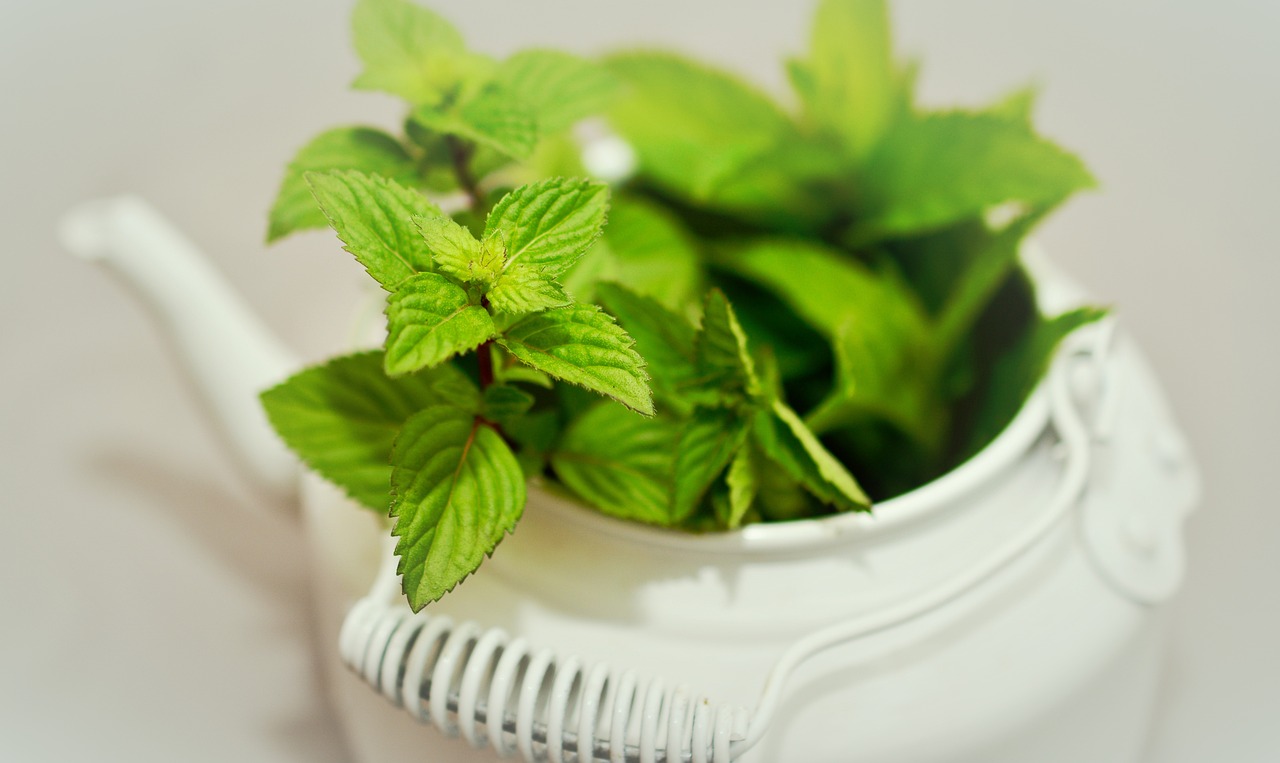
The Practice: During peak bloom, keep the hearth clear by using a damp, handcrafted cloth to wipe down surfaces daily. Using a simple vinegar and mint infusion keeps the air crisp and reduces the “dust” of the season without synthetic chemicals.
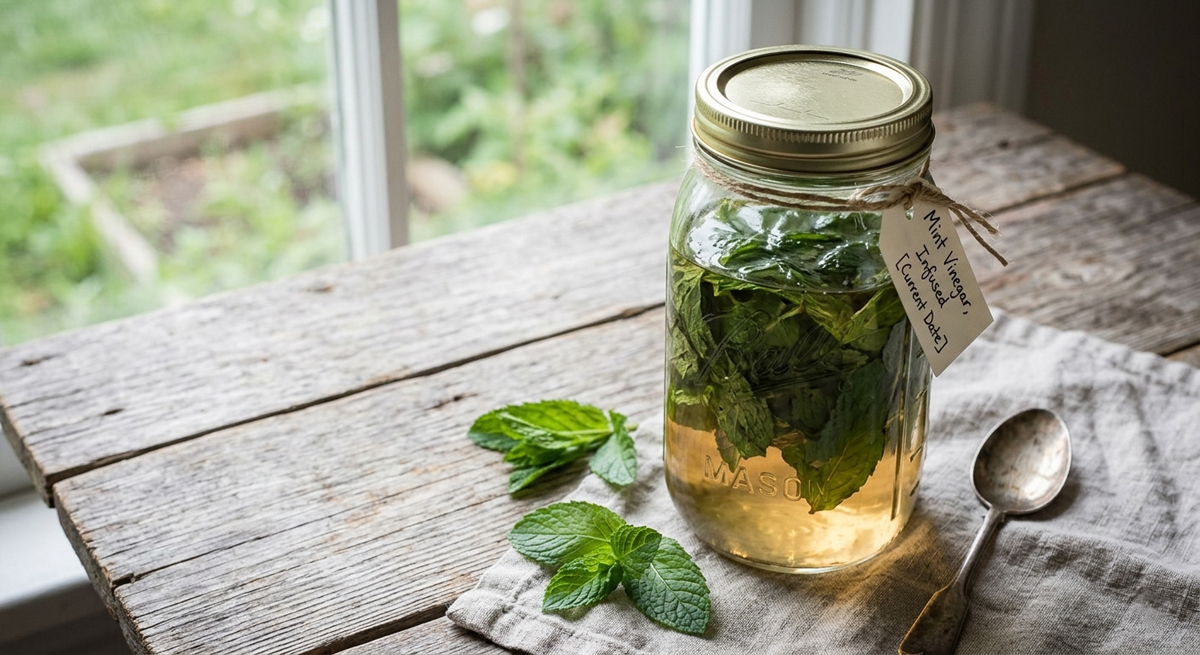
Mint-Infused Cleaning Vinegar
In the pioneer home, cleanliness and wellness were never separate. This simple infusion uses the high acetic acid content of white vinegar combined with the antimicrobial and refreshing properties of garden-grown mint. It is the perfect “barrier craft” for spring, keeping surfaces clear of seasonal dust and pollen while leaving the air crisp.
The Apothecary Method
Ingredients:
-
2 Cups White Distilled Vinegar: The foundational cleaner for a chemical-free home.
-
1 Cup Fresh Mint Leaves: (Peppermint or Spearmint). Bruised slightly to release the essential oils.
-
1/2 Cup Distilled Water: To be added after the infusion to balance acidity.
-
Optional: 1 strip of lemon peel for extra grease-cutting power.
Instructions:
-
The Harvest: Gather your mint in the early morning when the oils are most potent. Give them a quick rinse and pat them dry.
-
The Infusion: Place the bruised mint leaves into a clean glass quart jar. Pour the vinegar over the leaves until they are completely submerged.
-
The Steep: Seal the jar and place it in a cool, dark cupboard (not a sunny windowsill, which can degrade the oils). Let it steep for 2 to 3 weeks. Give the jar a gentle shake every few days.
-
The Strain: Once the vinegar has taken on a slight green hue and a strong minty scent, strain the liquid through a fine-mesh sieve or cheesecloth into a spray bottle.
-
The Balance: Add the distilled water to the bottle. This dilutes the vinegar just enough to be safe for most sealed surfaces while remaining effective.
The Pioneer View: Resilience Through Rhythm
“We do not seek to hide from the seasons, but to live in harmony with them. By nourishing the body with the nettles of the field and the honey of the hive, we turn a season of ‘allergies’ into a season of vitality.”
The Author:
Pioneerthinking.com: Ingredients for a Simple Life. Insights from a seasoned professional rooted in country living, with 28 years of horticulture expertise and over two decades of practical experience in homesteading, natural beauty and cosmetic creations, natural health, cooking and creative living.
Photo. Gemini
Let’s spread the love! Tag a friend who would appreciate this post as much as you did.