How to Make Whole Wheat Flour at Home
Why make whole wheat flour at home when it is readily available in all the stores, and you can simply buy it from the shelf? We all know that whole wheat is rich in vitamins and minerals but most people do not realize that whole wheat flour loses about 45 percent of its nutrients within 24 hours and 90 percent within 72 hours. This means that most of the nutrients found in whole wheat does not make it into your body.
You Will Need:
* A hand or electrical wheat grinder (a coffee grinder with a lid will also do the trick)
* Whole wheat
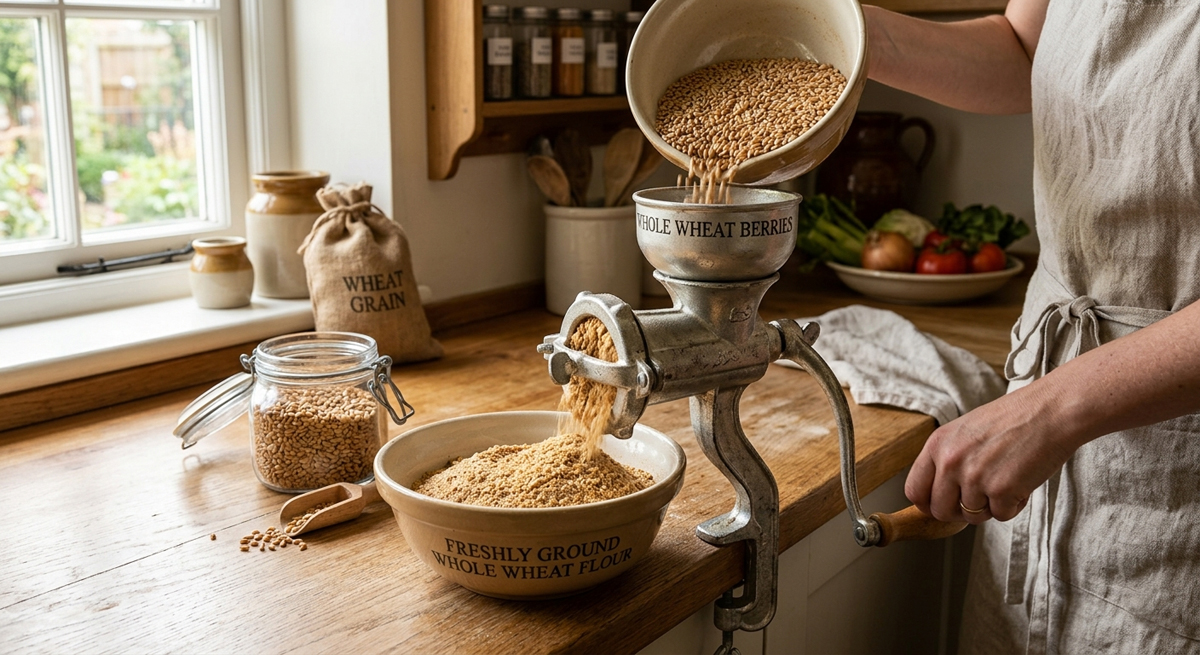
You simply put the whole wheat into the grinder and grind away until you have the correct amount of flour. A cup of wheat kernels will give you just under 2 cups of flour and a pound of wheat produces about 4 and a half cups of flour.
Buying a Grinder
Although there are a huge variety of grinders available on the market today you basically have a choice between two types of wheat grinders; namely electric grinders and hand grinders.
Electric grinders do all the work for you with the push of a button. They tend to be very noisy but are very durable and you can grind enough flour for 6 loaves of bread within 10 minutes.
Hand grinders require a bit of elbow grease as you grind the wheat to flour by using your arm to turn the handle. Although much slower than an electric grinder, this grinder gets the job done even when there is no electricity.
Buying Grain
If you buy your whole grains from a grainery or grain elevator it will be very cheap. You can also buy organic whole grains but these will be sold at a slightly higher price. There are many kinds of grains you can grind to make flour. Some of these include barley, navy beans, oats, rye, wheat berries, brown rice and corn.
Hints and Tips:
* Only grind enough flour to use immediately as freshly ground whole grains tend to get rancid quickly.
* You can store your whole grain wheat kernels at room temperature for quite awhile, just be sure to keep them cool and dry and away from bugs.
* Never put moist ingredients in your grinder.
* Making whole grain flour at home will cost you about 10c a pound as opposed to $4 and more you pay for it in the stores.
* A good grinder will cost you about $300.
* Ground your flour at low temperatures. Some mills heat up whilst grinding the flour giving it a rancid taste.
* Once you have ground your flour and you need to store it, put it in a cool dark place until such a time that you are ready to use it.
* Do not store flour for long periods as it will lose much of its nutrition with time. It is therefore better to use the flour right after grinding instead of storing it for later use.
Take the next step on your self-reliance journey! Now that you know how easy it is to mill your own nutritious flour, it’s time to put it to use. Head over to our [Whole Wheat Bread Recipe] to learn how to bake your first traditional, from-scratch loaf using your fresh harvest.
The Author:
Everyday Health Girl, Photo. Margaret Hoogstrate, Source: EA
The Pioneer View: A Return to the True Staff of Life
by pioneerthinking.com
To our ancestors, the rhythmic sound of a hand-cranked mill or the trip to the local water-powered gristmill wasn’t a lifestyle choice—it was the heartbeat of survival. Pioneers understood a fundamental truth that modern convenience has made us forget: flour is a living, perishable food. When early settlers packed their wagons for the trail, they didn’t pack heavy sacks of pre-ground flour that would quickly spoil, grow bitter, or attract pests on a long journey. Instead, they packed tight, dry barrels of whole grain berries.
Every batch of bread began with the physical labor of grinding only what was needed for the day’s baking. That daily sweat yielded a flour bursting with life, natural oils, and the full spectrum of nutrition that sustained families through harsh winters and long days of building homesteads from scratch.
Today, turning the handle of a manual grain mill connects us directly to that heritage. It forces us to slow down, appreciate the effort behind our daily bread, and reclaim a vital piece of self-reliance. When you bake a loaf with flour you milled yourself just moments before, you aren’t just feeding your family; you are keeping a timeless, resilient tradition alive.