Chinking Logs: How Pioneers Weatherproofed Their Cabins
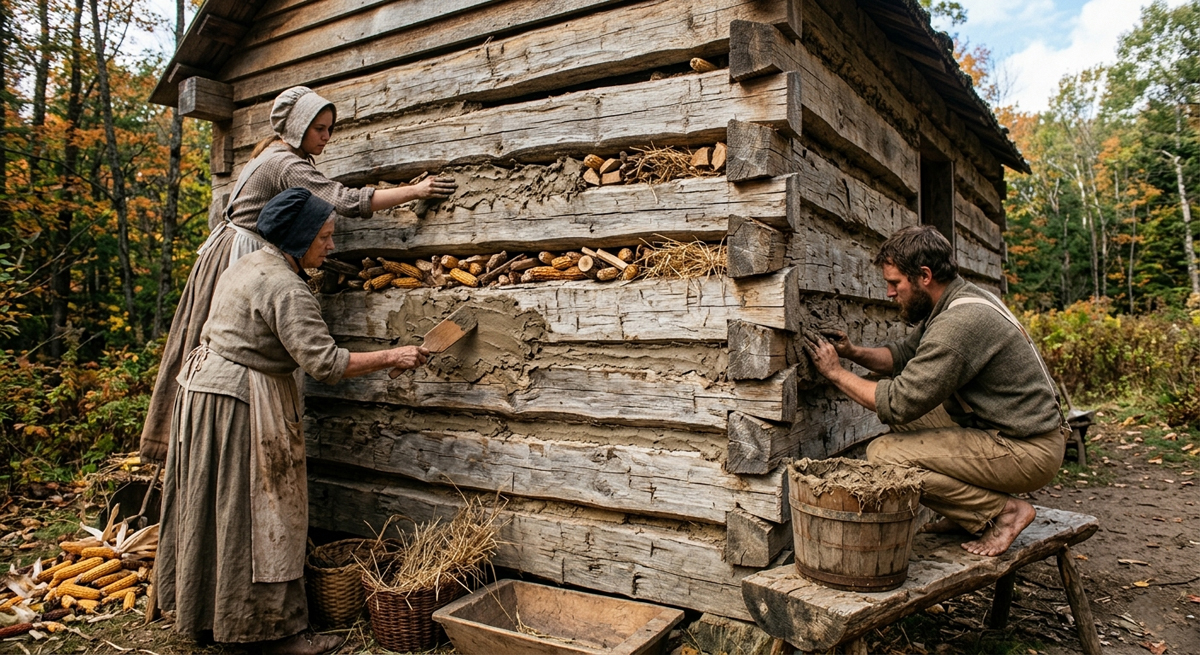
Chinking logs was a vital process for pioneers to transform a rough-hewn log cabin into a habitable, weather-tight home. It was a laborious, often communal, task that directly impacted the comfort and survival of early settlers.
The Art of Chinking
Chinking refers to the material used to fill the gaps between the logs of a cabin, preventing drafts, moisture, and pests from entering. For pioneers, this typically involved a mud or clay mixture, sometimes combined with other natural materials.
The Process and Time Involved
Pioneers applied chinking by hand, often using a trowel or their bare hands to push the mixture firmly into the gaps. Two main steps were involved:
- Placing “chink”: Larger pieces of wood, stones, or even corncobs were wedged into the widest gaps first. This provided a base and reduced the amount of mud mixture needed.
- Applying the “daub”: This was the mud or clay mixture smeared over the chink and directly into narrower gaps, creating a seal.
The time it took varied significantly based on the size of the cabin, the number of people working, and the skill of the builders. A small, basic cabin could take several days to a week of dedicated work for a few individuals to chink properly.
The Role of Women and the “Chinking Bee”
While the heavy labor of felling trees was often a male-dominated task, the meticulous work of chinking was a communal necessity that heavily involved women. In the race against the first frost, every set of hands was required.
- The Seasonal Crunch: Chinking usually happened in late summer or early autumn, coinciding with the frantic harvest season. Women often took the lead in the “daubing” phase, applying their experience with tactile tasks like kneading dough or working with pottery clay to ensure a smooth, airtight seal.
- The “Chinking Bee”: Much like a barn raising or a quilting bee, neighbors would gather to help a new family. Women worked side-by-side on scaffolding, sealing higher gaps while children gathered “chink” materials like corncobs and stones from the fields.
- Resource Management: Women were typically the keepers of the reinforcement fibers. They would save animal hair from tanning, straw from the barn, or even scraps of old wool to mix into the clay, providing the “rebar” that kept the walls from crumbling.
The Clay Mixture and its Properties
The mud or clay mixture, often called “daub,“ was typically composed of:
- Clay: The primary binding agent, providing stickiness and structural integrity.
- Sand: Added to prevent excessive shrinking and cracking as the mixture dried.
- Water: To achieve a workable consistency.
- Fibers: Common additions included straw, animal hair (horse, cow, or even human), or dried grasses. These fibers acted as reinforcement, preventing the daub from crumbling or falling out once dry.
Exact amounts varied widely as pioneers worked with available materials. A common ratio might be roughly one part clay to two or three parts sand, with enough water to make it pliable and a good handful or two of fibers per bucket of mix. The mud or clay was harvested locally from riverbeds, excavated areas, or specific clay deposits found on their land. They did not buy it; they gathered it.
The mud or clay made it weatherproof because, once dried, it created a relatively dense barrier that was difficult for wind and water to penetrate. The clay particles, when wet, expand and create a seal, and upon drying, they shrink but are held together by the sand and fibers, forming a solid mass. While not perfectly waterproof, it significantly reduced drafts and repelled most rain.
Drying Time and Winter Warmth
In good weather, chinking could dry sufficiently within a few days to a week, though it might take several weeks to fully cure. This process drastically reduced drafts—the primary source of heat loss. Combined with a central fireplace, a chinked cabin could maintain a tolerable temperature even in harsh North American winters.
Why is Chinking Typically White Today?
While pioneer chinking was the natural color of local earth (browns, greys, reds), modern chinking is typically white because it is made from synthetic rubber polymers (like acrylic latex). These modern materials are designed for flexibility and durability, often lasting 20 to 50 years, whereas pioneer mud required annual or bi-annual repair as organic materials like corncobs eventually rotted.
Pioneer life was characterized by this continuous cycle of maintenance. They understood that organic materials would decompose, and their building practices reflected a constant, seasonal interaction with their structures to keep them functional and safe.
The Whitewash Recipe: “Poor Man’s Paint”
Log cabins were notoriously dim—small windows (if they had glass at all) and dark wood made for a cave-like atmosphere. Whitewashing was the pioneer’s primary tool for “lighting” a room before electricity.
Pioneers didn’t head to a hardware store for paint; they manufactured it from what they had. The base was almost always slaked lime (calcium hydroxide).
- The Lime: Created by burning limestone or seashells in a kiln, then “slaking” it with water. This created a caustic but brilliant white paste.
- The Binder: To keep the chalky lime from rubbing off on clothes, they added “fixatives” like salt, milk (casein), or even animal glue rendered from hooves.
- The Application: It was thin and watery. They would brush it directly over the dried mud daubing and sometimes over the logs themselves.
>> Read more: Milk Paint Recipe
Why Whitewash the Chinking?
It wasn’t just for aesthetics; it served three very practical purposes:
- Reflective Lighting: The white surface of the chinking acted like a series of long, horizontal mirrors. It caught the flickering light from the fireplace or a single tallow candle and bounced it around the room, making it possible to sew, read, or cook after sundown.
- Sanitation (The “Bug Killer”): Lime is naturally alkaline and antimicrobial. Painting the chinking—which was made of organic mud, straw, and hair—helped prevent mold growth and discouraged bedbugs, spiders, and lice from nesting in the cracks.
- Sealing the Dust: Raw mud daubing tends to “shed” fine dust as it cures or shifts. A coat of whitewash created a thin, hard shell that kept the interior of the cabin much cleaner.
The “Spring Cleaning” Ritual
Whitewashing was an annual event, usually part of a rigorous spring cleaning. After a winter of woodsmoke and soot coating the walls, the family would scrub the logs and apply a fresh, bright coat of lime. It signaled the end of the “dark months” and sanitized the home for the year ahead.
The Author:
Pioneerthinking.com: Ingredients for a Simple Life. Insights from a seasoned professional rooted in country living, with 28 years of horticulture expertise and over two decades of practical experience in homesteading, natural beauty and cosmetic creations, natural health, cooking and creative living.
Photo. Gemini