
Botanical Hair Tints: Foraging for Natural Color
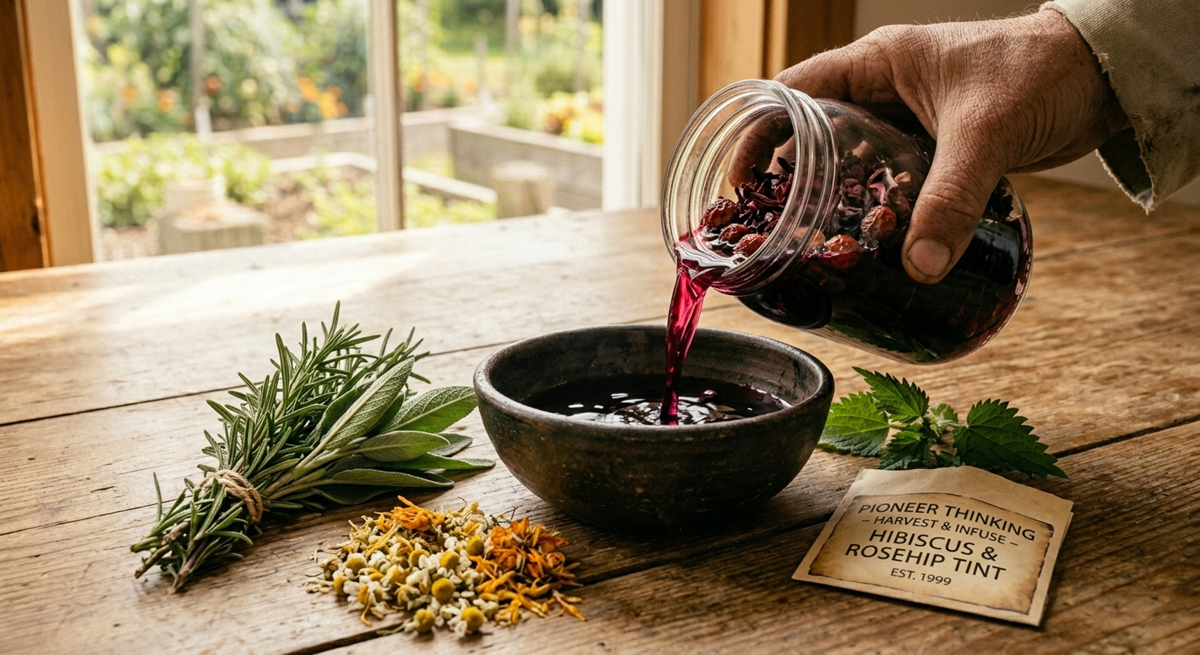
Long before synthetic dyes, the garden and the hedgerow provided the palette for hair care. As a horticulturist, I’ve found that the same plants we cultivate for their beauty or flavor often hold “chromatic secrets” within their leaves, bark, and petals.
By using herbal infusions, we aren’t just changing a shade; we are conditioning the hair with the vitamins and minerals found in our own soil.
1. The Golden Hour: Lightening with Chamomile and Calendula
For those looking to enhance golden tones or gently brighten blonde hair, summer-blooming botanicals are the answer.
-
The Infusion: A strong tea made from dried Chamomile flowers and Calendula petals.
-
The Horticulture Link: Both are staples in a “Pioneer Garden.” Chamomile acts as a natural soothing agent, while Calendula adds a vibrant, sunny luster.
2. The Deepening Shade: Darkening with Rosemary and Sage
If you wish to deepen brunette tones or mask early greys without harsh chemicals, look to the woody perennials in your herb spiral.
-
The Infusion: Simmer fresh Rosemary sprigs and Sage leaves in distilled water.
-
The Pioneer View: Pioneers used Rosemary not just for color, but as a scalp tonic to encourage growth during the dry winter months.
3. The Warm Glow: Red Tones from Hibiscus and Rosehips
To bring out auburn or copper highlights, we look to the high-vitamin-C plants that thrive in the late summer.
-
The Infusion: Dried Hibiscus calyxes and crushed Rosehips.
-
The Secret: Hibiscus is a powerful pH balancer. It leaves the hair cuticle smooth and incredibly shiny, reflecting more light than any store-bought “gloss.”
The “Pioneer View”: Stewardship of the Self
In the heritage home, beauty isn’t something you buy—it’s something you tend. Using a botanical rinse is an act of self-sufficiency. It requires the patience to wait for an infusion to steep and the wisdom to know that nature works slowly but deeply.
When you use a rosemary rinse you grew yourself, you are practicing the ultimate form of “from-scratch” living. You are bypassing the industrial supply chain and returning to the wisdom of the larder.
The Author:
Pioneerthinking.com – Ingredients for a Simple Life. Refining the art of natural living since 1999. Backed by 28 years of horticulture expertise and a lifetime of practical experience in herbal traditions.
Photo. Gemini
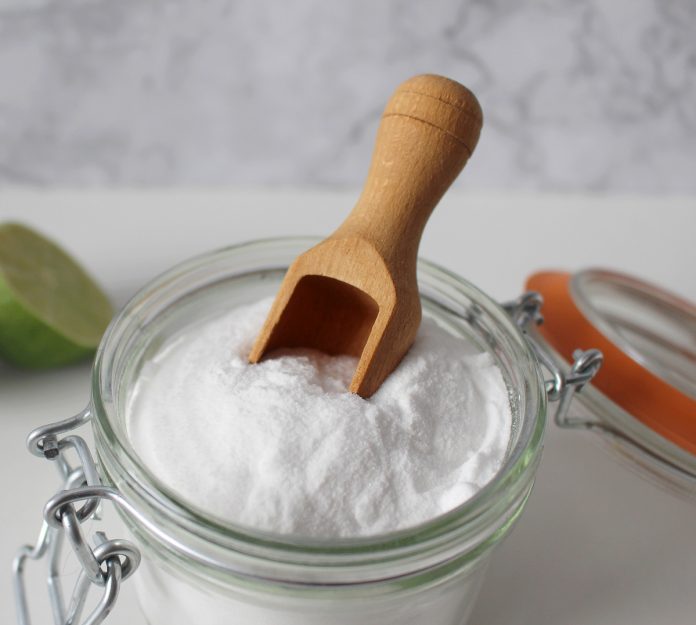

I heard that the hair can be lightened with baking soda and peroxide, should I use 3% hydrogen peroxide or 6% hydrogen peroxide. I want to achieve a light result and i don’t think that the 3% hydrogen peroxide will give me the result I want
Personally I have dark brown hair, almost jet black. I used 3% peroxide and baking soda and it lifted my hair to a light brown, a little lighter than copper. When I wanted it to be lighter I just did it again and it was a golden dark blonde. I don’t know how light you’re trying to go, but that’s just my experience. You could always lighten it twice with the 3% peroxide if you want.
It doesn’t matter on the percentage you use its all about how much peroxide you pour out. I lightened my friends hair with peroxide and baking soda, and I just made sure that the mixture was pasty instead of liquid. Therefore there’s never too much product.
Hi Chloe, It is generally not recommended to use baking soda and hydrogen peroxide to lighten your hair as it can cause damage to your hair and scalp. Baking soda has a high pH level and can strip your hair of its natural oils, making it dry and brittle. Hydrogen peroxide is a strong bleaching agent that can also cause damage and lead to hair breakage. It’s important to be cautious when experimenting with hair lightening methods and consider using safer alternatives or seeking professional advice.