Spring Garden Flowers for The Wedding
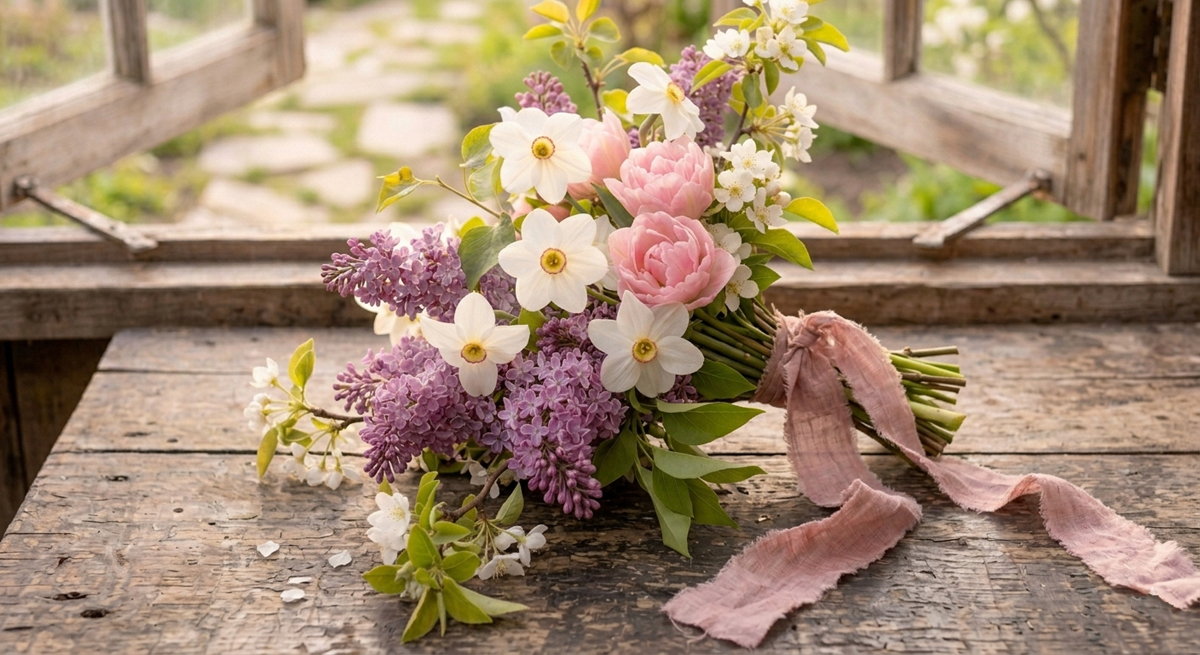
Spring isn’t just a season; it’s a fresh start. After the long, quiet hush of winter, the first break of a crocus or the heavy scent of a budding lilac feels like a promise kept. Planning a wedding during this window lets you tap into the earth’s most energetic “burst” of life.
A home-grown spring bouquet shouldn’t look like it came from a refrigerated floral case. It should look like it was gathered in the morning mist—a “living” arrangement that smells like damp earth and sweet blossoms.
Choosing Your Spring Flowers
To stay true to a country aesthetic, we look for flowers that have a history in the backyard garden.
- The Lilac: The “Queen of Spring.” Lilacs have a nostalgic, heavy scent that anchors the memory of the day. Choose the Common Purple for depth or ‘Madame Lemoine’ for a crisp, white look.
- The Poet’s Daffodil: Skip the large, bright yellow trumpets. Look for the “Poet’s” variety—pure white petals with a tiny, red-edged center. They are delicate and bloom later in the spring.
- Heirloom Tulips: Look for Parrot or Double Peony tulips. These have ruffled, heavy heads that look like luxury but come right from the spring soil.
- Fruit Blossoms: Don’t forget the orchard! A few branches of Apple or Pear blossoms add a “wild” look that feels tied to the land.
How to Keep Your Bouquet Fresh
Garden-fresh flowers are “living” things and can be temperamental. Since we avoid chemical sprays, we rely on traditional conditioning to keep the bouquet from wilting.
1. The Best Time to Cut
Cut your flowers in the cool of the late evening or the very early morning before the sun hits the dew. This is when the stems are full of water and at their strongest.
2. The “Crush” Method for Lilacs
Lilacs and fruit branches have woody stems that struggle to drink enough water.
- The Trick: Use a clean hammer to gently crush the bottom inch of the stem. Immediately put them into warm water. This helps the stems “open up” to drink.
3. The Daffodil Rule
Daffodils leak a thick sap that can “clog” other flowers and make them wilt.
- The Trick: Put your cut daffodils in their own jar of water for 24 hours before mixing them with other flowers. Once they’ve sat, move them to the bouquet without cutting the stems again.
4. Homemade Flower Food
Skip the store-bought packets. Use what you have in the pantry:
- A pinch of Sugar: To feed the blooms.
- A drop of Apple Cider Vinegar: To keep the water clean and slightly acidic.
The Finishing Touch
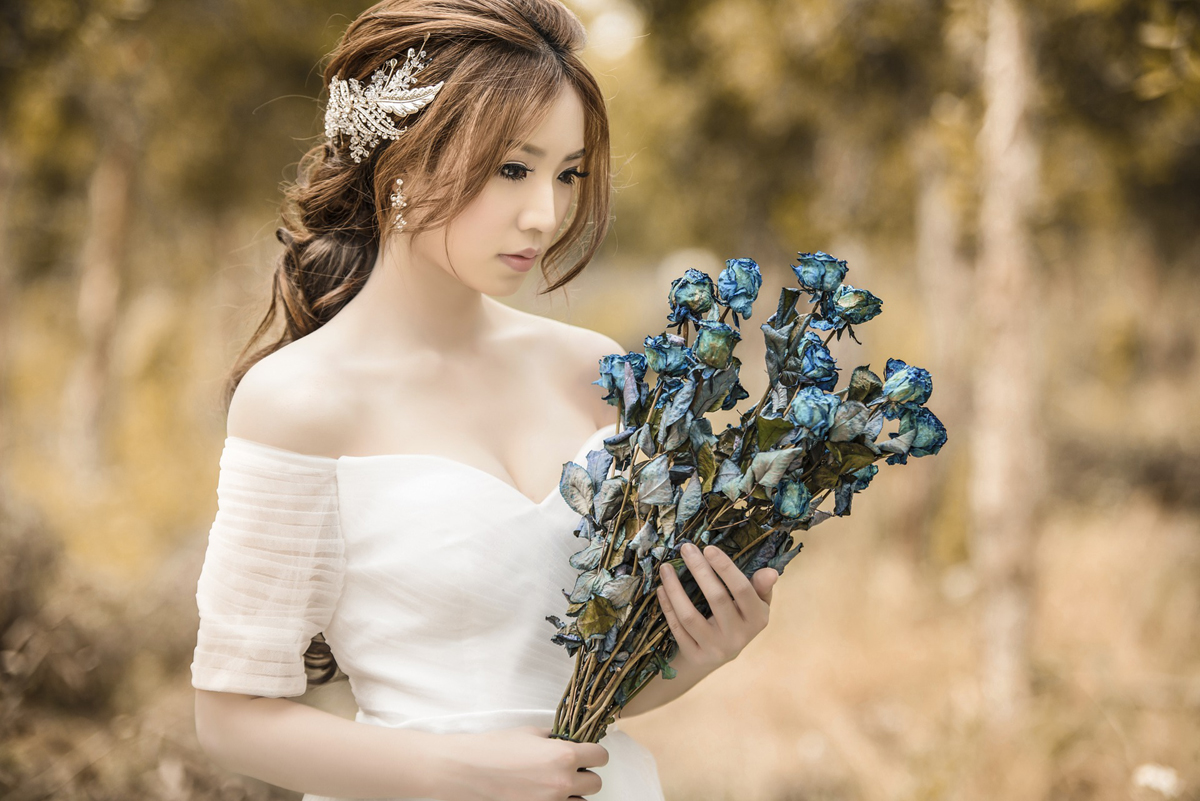
Avoid plastic tape or stiff satin ribbons. Instead, use a strip of hand-dyed linen or a piece of old lace. Leave the ends long so they catch the spring breeze as you walk.
The Author:
Pioneerthinking.com: Ingredients for a Simple Life. Insights from a seasoned professional rooted in country living, with 28 years of horticulture expertise, as well as floral design, and over two decades of practical experience in homesteading, natural beauty and cosmetic creations, natural health, cooking and creative living.
Photo. Gemini