Old-Fashioned Purple Wedding Flowers
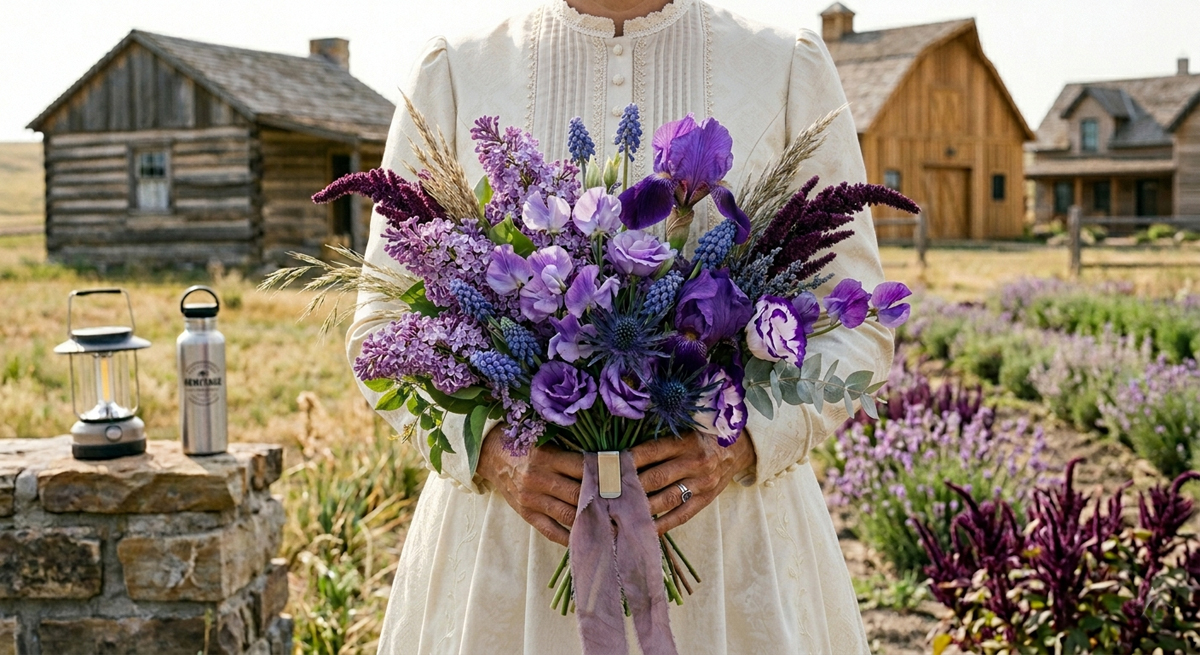
In the language of the garden, purple has long been a color of mystery, grace, and distinction. Whether you are envisioning the soft, misty lavenders of a Victorian-inspired ceremony or the deep, dramatic plums of a late-harvest autumn celebration, purple flowers offer a bridge between the wildness of nature and the elegance of a wedding.
As a horticulturist and floral designer, I find that the most beautiful wedding flowers aren’t always the ones shipped in from afar, but the ones that reflect the season and the soil. Here is how to bring the regal beauty of purple botanicals into your heritage-style celebration.
1. Spring’s Old-Fashioned Favorites
For a spring ceremony, lean into the “pioneer spirit” by choosing flowers that have been staples in farmhouse gardens for generations.
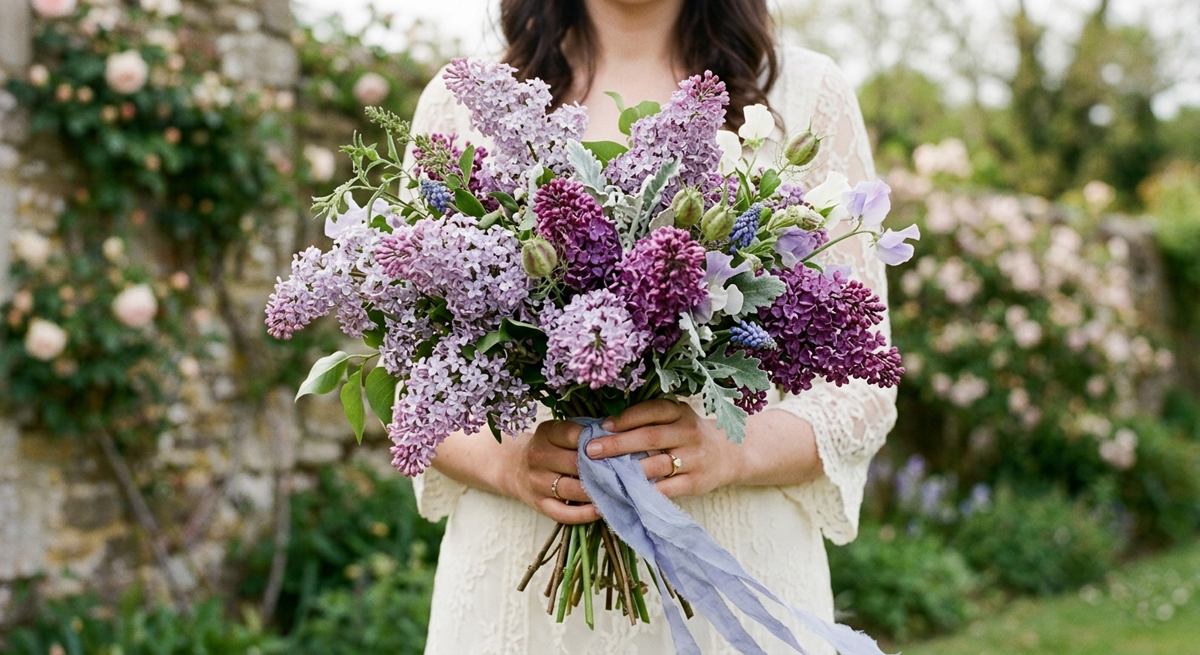
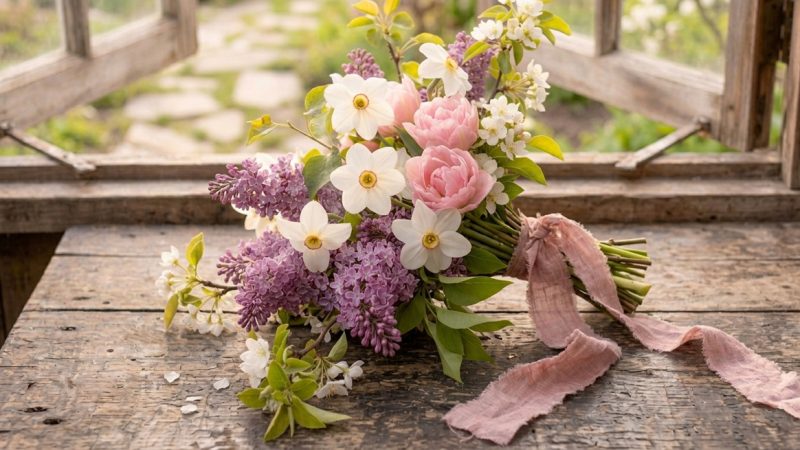
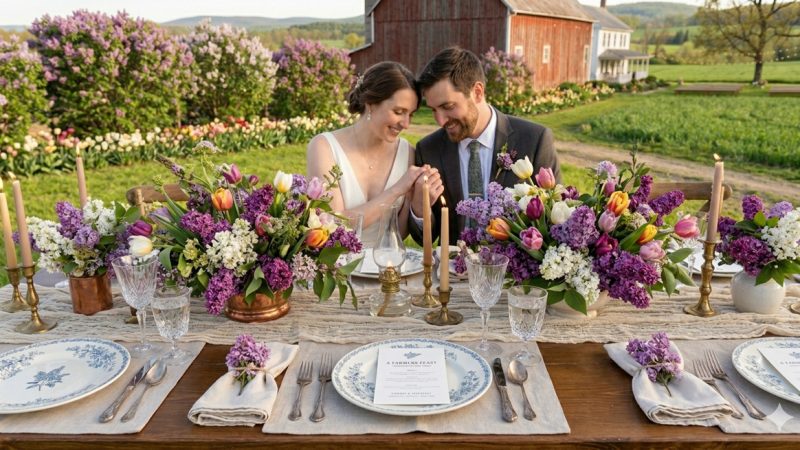
Lilacs (Syringa): Nothing captures the essence of a spring wedding like the heady fragrance of lilac. They offer a range of shades from pale “blue-lavender” to deep “Persian purple.”
Pro Tip: To prevent wilting, sear the woody stems in hot water or smash the bottom inch of the stem to help them draw water.
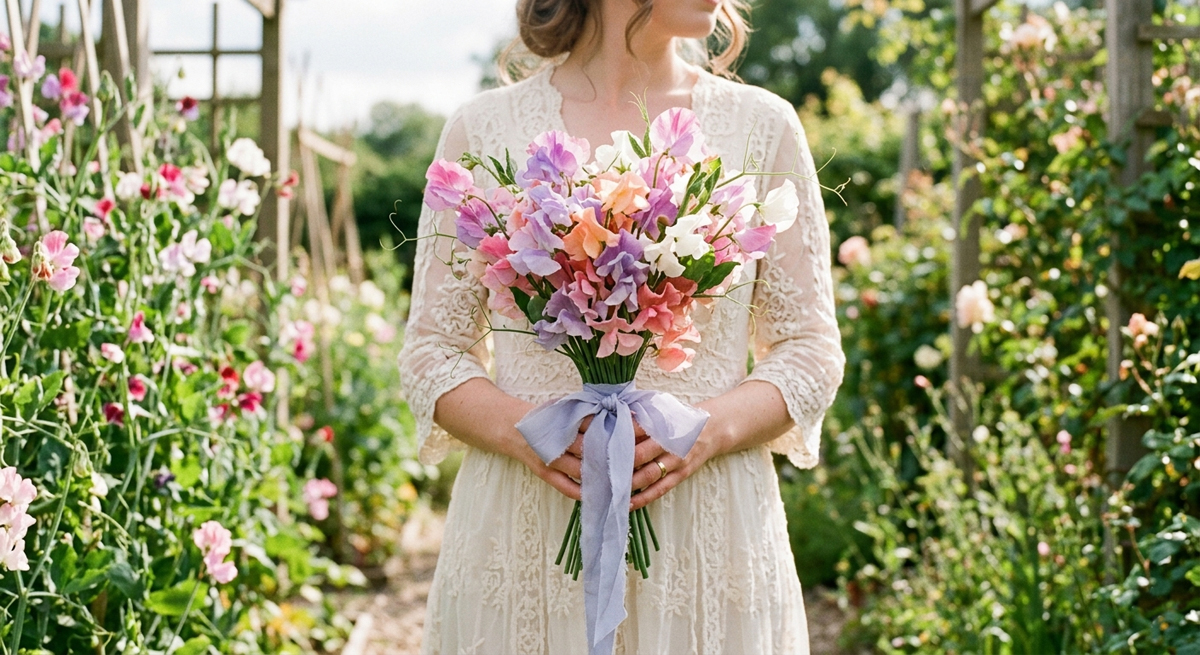
Sweet Peas (Lathyrus odoratus): These are the epitome of vintage charm. Their ruffled petals and delicate scent make them perfect for hand-tied “nosegay” bouquets.
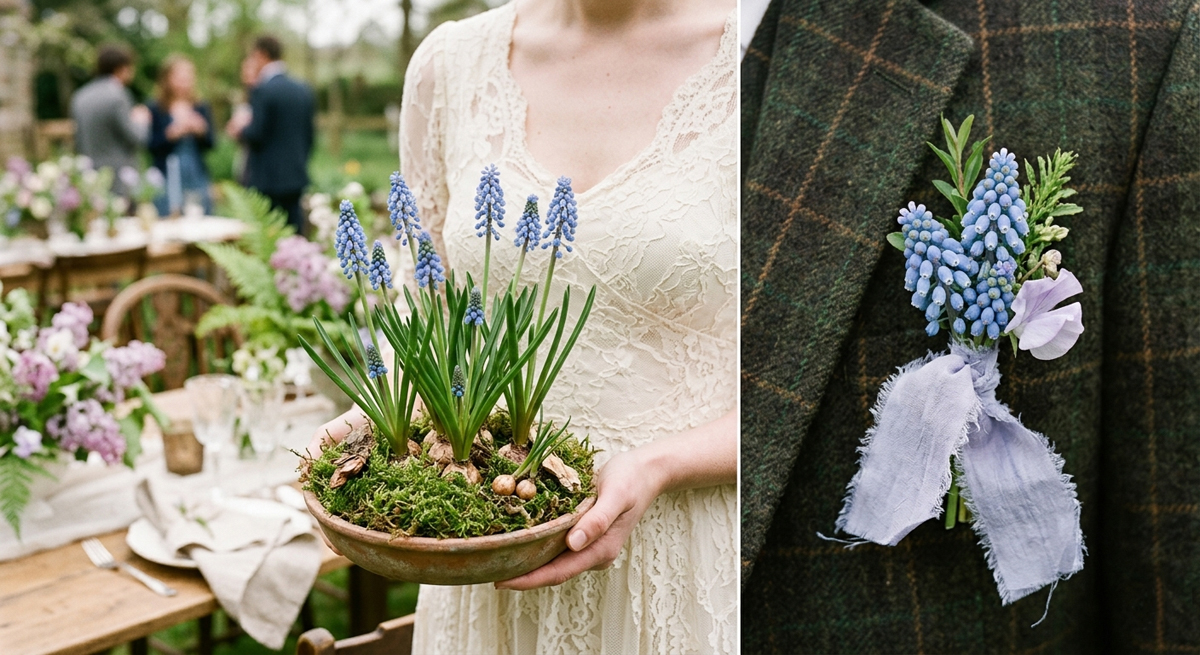
Grape Hyacinth (Muscari): These tiny, bell-shaped clusters are wonderful for adding texture. They work beautifully in boutonnieres or as a “living” table centerpiece when kept in their bulbs and tucked into moss.
2. Summer’s Regal Bloomers
As the heat of summer arrives, the purple palette shifts toward more saturated, hardy varieties that can withstand an outdoor ceremony.
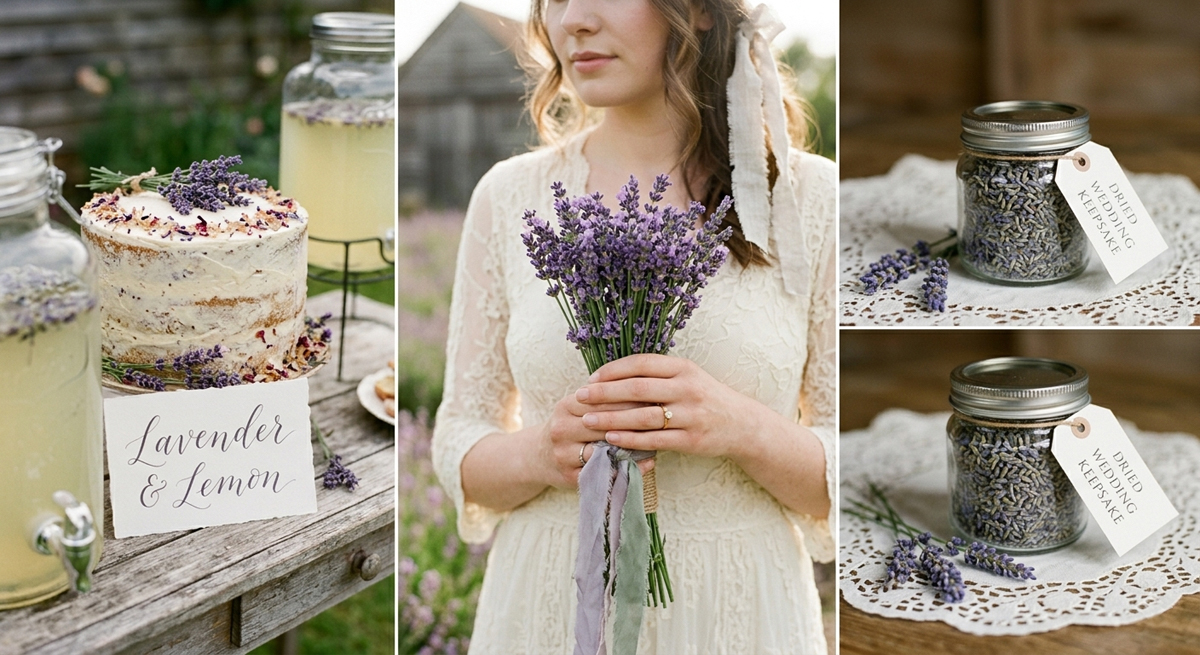
Lavender (Lavandula): For a self-reliant bride, lavender is a triple threat: it provides a calming scent, dries beautifully as a keepsake, and can even be used to flavor the wedding cake or lemonade.
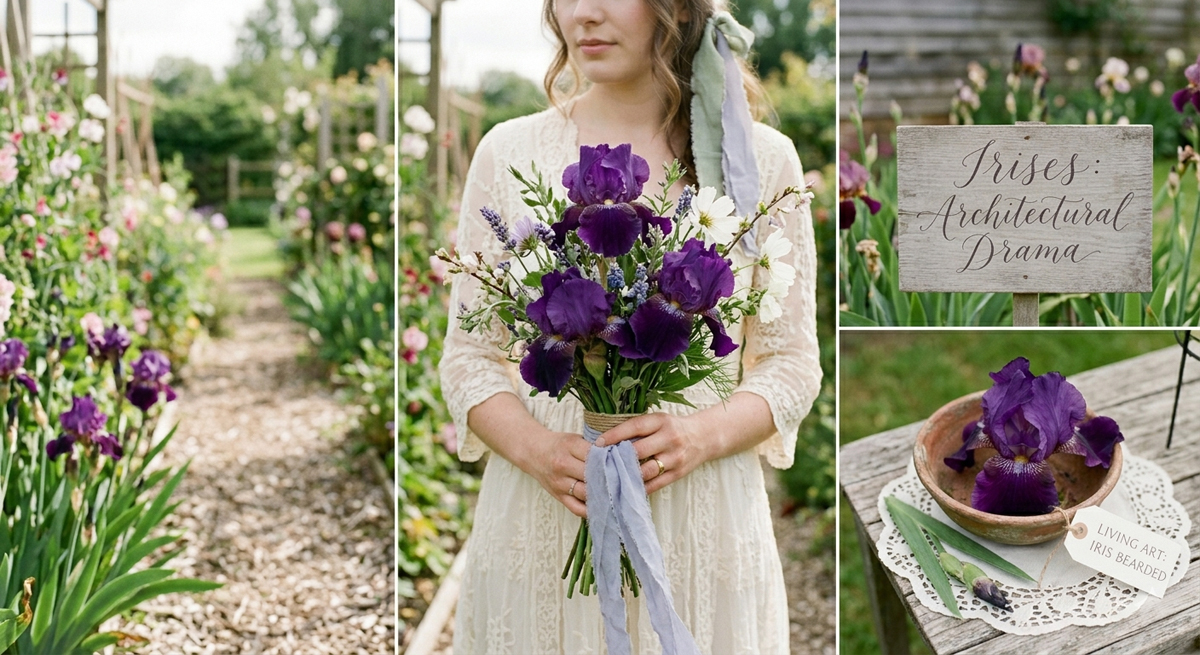
Irises: With their architectural “standards” and “falls,” the Iris brings a touch of sophisticated drama. The deep purple bearded iris, in particular, feels like a piece of living art.
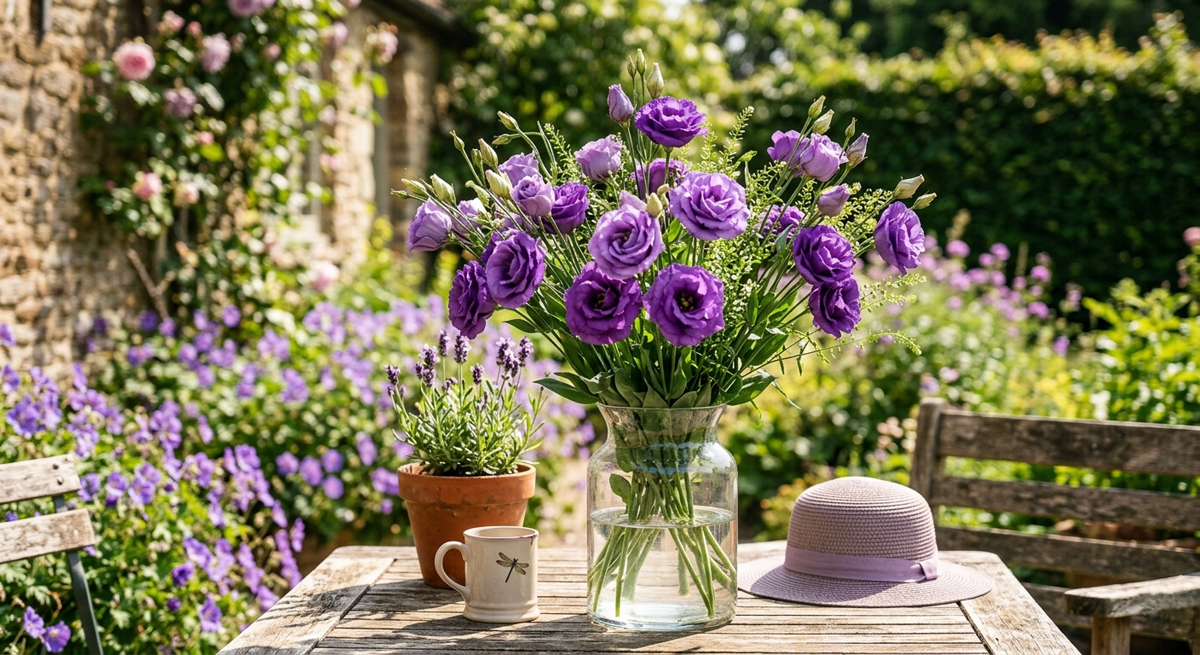
Lisianthus: Often mistaken for roses, purple Lisianthus is exceptionally hardy. It has a high “vase life,” making it an excellent choice for a long day in the sun.
3. Autumn’s Deep Harvest Hues
Late-season weddings benefit from the rich, moody tones of the encroaching harvest.
Asters: These “star-flowers” provide a profusion of tiny purple blooms that feel wild and natural.
Salvias: Many varieties of Salvia offer striking, dark purple spikes that add vertical interest to large floral arrangements or “pillar” displays.
Ornamental Cabbage and Kale: For a truly unique “Natural Home” aesthetic, don’t overlook the dusty purples found in ornamental kale. They add an earthy, grounded feel to a rustic farm wedding.
A Note on Heritage Sustainability
Planning a wedding with a focus on self-reliance means looking beyond the day itself.
The Forever Bouquet: Many purple flowers, such as Lavender, Statice, and Globe Thistle, are excellent candidates for air-drying. You can preserve your wedding flowers to create a “Legacy Story” in your home for years to come.
The Living Gift: Consider using potted purple perennials as centerpieces that guests can take home and plant in their own gardens—a growing reminder of the day.
Choosing purple flowers for your wedding isn’t just about a color theme; it’s about celebrating the rich diversity of the botanical world. Whether gathered from your own backyard or sourced from a local grower, these blooms carry with them the timeless wisdom of the garden.
The Pioneer Spirit: A Legacy in Purple
In the quiet resilience of a homestead garden, purple was more than just a decorative choice—it was a color that symbolized the enduring heart of the frontier. For a pioneer bride, a wedding bouquet wasn’t ordered from a catalog; it was a “gathered grace,” harvested from the very soil she and her family labored to tend.
Integrating these flowers into a heritage wedding honors a long lineage of women who found beauty in the practical and strength in the seasonal.
The Gift of Fragrance: In an era before modern perfumes, the scent of crushed Lavender or Lilac tucked into a bodice or carried down a dirt aisle served as a sensory memory, often pressed into a family journal to be shared with future generations.
The Sturdiness of Spirit: Flowers like the Texas Bluebell (Lisianthus) were cherished because they mirrored the pioneer woman herself—delicate in appearance but possessing an “ironclad” constitution that could withstand the unrelenting sun without losing its composure.
A “From-Scratch” Celebration: Choosing deep, regal purples connects us to the traditional wisdom of the apothecary and the dye-pot. Many of these heritage blooms were once valued not just for their petals, but for the natural pigments and remedies they provided the household.
Bringing these botanicals to the altar today is a beautiful way to weave a thread of history into your new beginning. It is a nod to those who came before us—a celebration of the “never-say-die” spirit that blooms just as vibrantly now as it did on the open prairie.
The Author:
Pioneerthinking.com: Ingredients for a Simple Life. Insights from a seasoned professional rooted in country living, with 28 years of horticulture expertise and over two decades of practical experience in homesteading, natural beauty and cosmetic creations, natural health, cooking and creative living.
Photo. Gemini