
🍊 How to Make Traditional Pomanders for Holiday Scent
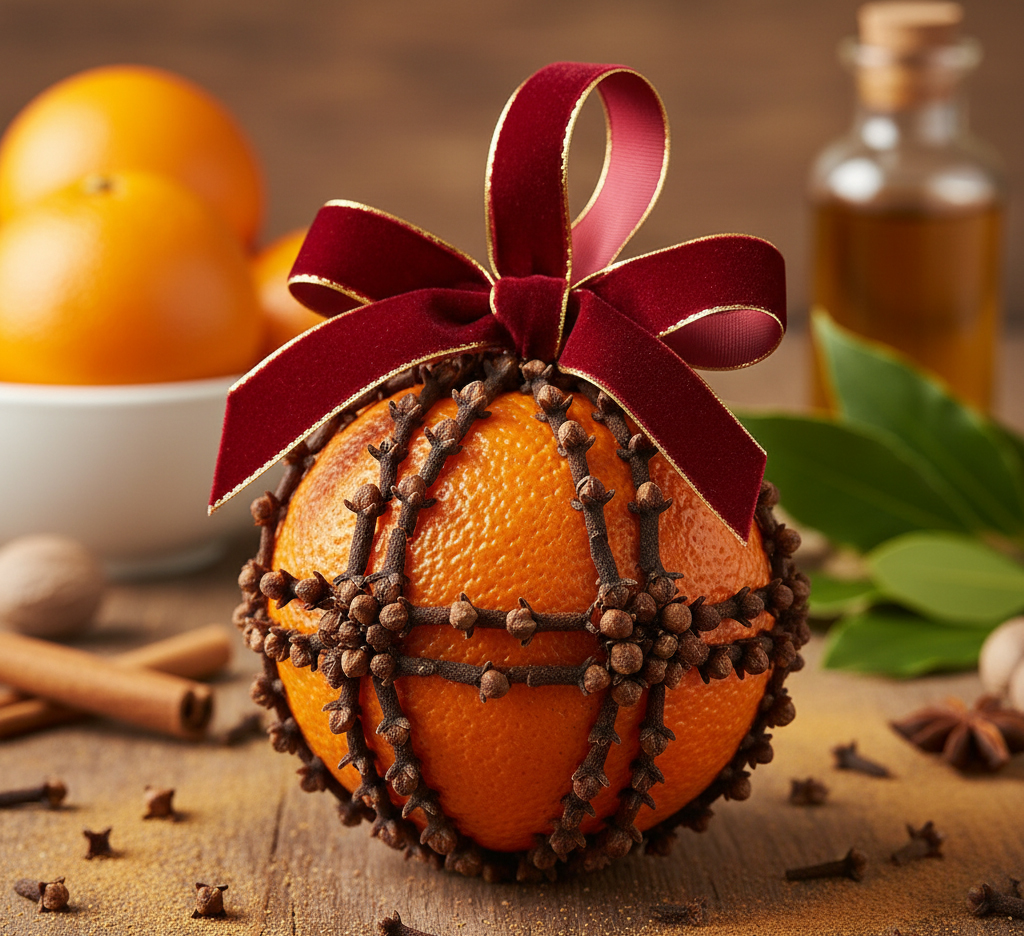
Pomanders—fragrant balls typically made from fruit studded with cloves—are a time-honored tradition enjoyed by royalty and commoners alike for centuries. Originating from the French word pomme d’ambre (meaning “apple of amber”), these sweet-smelling, natural air fresheners and moth repellents are perfect for filling your home with a warm, spicy, and citrusy scent.
Once cured, a finished pomander can last for many years, subtly releasing its delightful fragrance. They look beautiful stacked in a bowl as a centerpiece or tied with ribbon and hung in closets and drawers.
Supplies You Will Need
-
Fruit: Small to medium, firm, and unblemished citrus fruits (oranges, lemons, limes, or even small apples). Oranges are the most traditional and easiest choice.
-
Whole Cloves: Approximately 3/4 to 1 ounce (or 20–25 grams) of large-headed, good-quality whole cloves.
-
Spice Mixture: 1 tablespoon each of ground cinnamon, nutmeg, and ground cloves.
-
Preservative (Optional but Recommended): 4 drops of sandalwood oil OR 1 tablespoon of powdered orris root. (See notes below on preservatives.)
-
Tools for Piercing: A knitting needle, skewer, thick toothpick, or fork.
-
Hand Protection: A thimble, rubber finger cot, or masking tape to wrap around your fingers (the cloves can become painful to push after a while!).
-
For Curing: A paper bag (do not use plastic).
-
For Ribbon Design (Optional): Masking tape or elastic bands.
-
For Hanging (Optional): Decorative ribbons.
Step-by-Step Instructions
1. Prepare the Fruit and Spice Mixture
-
Select and Wash: Choose firm, unblemished fruit. Wash and thoroughly dry the fruit.
-
Mix the Spices: In a shallow bowl or a paper bag, combine the ground spices (cinnamon, nutmeg, ground cloves).
-
Add Preservative: If using sandalwood oil, mix the drops into the spices. If using powdered orris root, mix it directly into the spices. Set aside.
-
-
Mark for Ribbons (Optional): If you plan to decorate your pomander with ribbons, use masking tape to create the crisscross design where the ribbons will eventually be placed. This area will be left un-studded with cloves.
2. Stud the Fruit with Cloves
-
Protect Your Hands: Wrap your fingers with a thimble or masking tape to prevent soreness.
-
Pre-Drill Holes: Using the knitting needle or skewer, poke holes into the fruit. Crucially, the hole should be about double the size of the clove stem. This is because the fruit will shrink significantly as it dries.
-
Insert Cloves: Gently push a whole clove into each pre-drilled hole.
-
Spacing is Key: Continue this process until the entire fruit is covered in cloves, leaving the area under the masking tape clear (if using ribbons). The closer the cloves are, the better the final result. Maximum spacing should be no more than 1/4 inch.
3. Coat and Cure the Pomander
-
Spice Coating: Place the remaining spice mixture in a clean paper bag. Place the studded fruit inside the bag.
-
Roll and Coat: Gently roll the pomander in the spices until it is completely and evenly coated. The spices act as a protective, drying layer.
-
Curing: Leave the pomander in the paper bag and place it in a cool, dry area away from direct sunlight.
-
Daily Maintenance: Roll the pomander in the spices daily for the first week to ensure even drying and full coating.
-
Curing Time: The curing process typically takes 4 to 6 weeks but can vary.
-
-
Check for Curing: The pomander is dry when it feels very light for its size and sounds hollow when gently tapped with your knuckle.
-
Discarding: If you notice any signs of mold or decomposition, discard the fruit immediately.
4. Display and Enjoy
-
Final Touches: Once cured, shake off any excess spices. Remove the masking tape.
-
Decorate: Place ribbons in the un-studded areas in a criss-cross fashion. Sew or tie the ends together and form a loop for hanging.
-
Display: Your pomander is ready! Hang it in a closet, place it in a drawer, or arrange several in a decorative bowl.
-
Rejuvenation: When the scent eventually begins to fade (which may take years!), simply add a few drops of clove oil or your desired essential oil to your leftover spice mixture and reroll the pomander to refresh its fragrance.
💡 Fun Facts About Pomanders
-
Medieval Origins: The earliest pomanders weren’t fruit! They were typically silver, gold, or brass containers worn on a chain, often shaped like a ball, apple, or skull. They contained aromatic substances like ambergris, musk, or civet, which were believed to protect the wearer from disease (like the plague) and bad smells.
-
Royal Connection: In England, pomanders were often carried by royalty. Queen Elizabeth I was known to carry a silver pomander, which was thought to ward off infections in public spaces.
-
An Early Insect Repellent: The high concentration of cloves in the fruit is what makes a pomander an effective, all-natural moth repellent—a highly valued quality in Victorian times when storing expensive textiles.
❓Questions
1. Does it need the sandalwood?
No, it does not strictly need the sandalwood oil, but a preservative is highly recommended.
-
The goal of the sandalwood oil (or orris root powder) is to act as a preservative and a scent fixative. It helps absorb moisture, speeds up the drying/curing process, and minimizes the risk of mold or decomposition.
-
Traditional Alternative: Powdered orris root is the most traditional and effective fixative. It is a dried, ground root of the Iris plant and is excellent for preserving the pomander and enhancing the fragrance.
-
Spice Mix Alone: You can cure a pomander using only the ground spice mixture (cinnamon, nutmeg, ground cloves), but you must be much more vigilant about daily rolling and ensuring the environment is perfectly cool and dry. Without a fixative, the risk of mold is higher.
2. Can you make pomanders from apples or lemons?
Yes, you can make pomanders from apples and lemons (and other citrus fruits)!
-
Oranges (Most Recommended): They are the easiest and most traditional because their skins are tough enough to hold the cloves but soft enough to pierce, and they have the ideal shape and size.
-
Lemons and Limes: Excellent choices. Their dense structure and strong citrus oil content result in a very long-lasting, fragrant pomander. Follow the same process.
-
Apples: Yes, but they are less common for long-term pomanders. Apples have much higher water content than citrus fruits, making them more prone to decomposition and mold during the curing process. If you use apples, you must use a strong preservative (like orris root) and ensure a perfect curing environment. Apple pomanders are often considered a more temporary decoration.
The Author:
Pioneerthinking.com – Ingredients for a Simple Life
Copyright Pioneerthinking.com 2003 – For personal use only.
Photo. Gemini



So… Is it really necessary to use the sandalwood oil?
I wanted to make quite a few of these for gifts,
And realized how pricey the oil is.
No, you certainly don’t need the oil.
Hi Sara,
You absolutely can skip the sandalwood oil, especially when making a large number of pomanders for gifts.
The primary purpose of the sandalwood oil (or any preservative) is to speed up the drying process and prevent mold while the fruit is curing.
Two Alternatives to Sandalwood Oil: Based on your desire to save on cost, here are two excellent alternatives:
Use the traditional fixative (recommended): Powdered orris root. Orris root (the dried, powdered root of the iris bulb) is the most traditional and effective fixative used for pomanders. It acts as a superb drying agent and scent enhancer. It is often less expensive than sandalwood essential oil, especially when bought in bulk. You only need about 1 tablespoon mixed into your spice blend per pomander.
You can also just use the spice blend alone. (cost free alternative) The combination of spices itself is highly absorbent and antifungal. If you skip the preservative entirely, you must be extra vigilant during the curing process. Make sure to roll the pomanders daily in the spices for the first week, and place them in a spot that is cool, dry, and has good airflow. This will minimize the risk of mold.
Since you are making gifts, using powdered orris root would give you the best chance of successful curing for every pomander without the expense of the essential oil!
I live in a humid hot climate. It’s a bit buggy. Is it ok to wrap in tin foil and let it dry out in the refrig? Thanks
hi Susan,
No, please avoid wrapping your pomanders in tin foil (or plastic wrap/bags). Foil and plastic prevent any air circulation. In a humid climate, wrapping the fruit will essentially trap moisture and heat, creating a perfect incubator for mold and decomposition. This is why we recommend using a paper bag. The paper bag allows the fruit to “breathe” while keeping the spice mixture contained. It absorbs some of the moisture released during the drying process.
Is it okay to dry out in the refrigerator?
No, the refrigerator is not the best environment for curing pomanders. While the refrigerator is cool, it is also highly humid and tends to circulate moisture. The chilling process may cause the fruit to shrivel rapidly, but the trapped moisture will still likely lead to mold or spoilage before it fully dries out.
You need an environment that is dry, cool, and has constant airflow. A good option for you would be to use a dehydrator. Set to its lowest temperature (around 100∘F or 38∘C) will achieve a perfectly cured pomander in just a few days, safely bypassing the humidity.
Alternative: Use a Fan: If you don’t have a dehydrator, place the pomanders (still in their paper bags) in a room with a dehumidifier running or directly in front of a small fan in a dry, dark closet. This constant air movement is essential for wicking away moisture.
Addressing the Bugs: The whole cloves and the ground spice mixture are natural insect deterrents!
My oranges tend to get spoilt and start dripping
Help
I just put the cloves and kept aside
Did not use any oil
The oil is a preservative. You really need to include it as otherwise the oranges will spoil and drip like you say. You also need to include the period of drying out to make sure they properly cure. Including more cloves around the outside of the orange might help as well, as clove oil is a natural antifungal and antibacterial preservative.
hi Rabs,
Your oranges are spoiling because you skipped the spice coating and curing step. The ground spices (cinnamon, nutmeg, cloves) are essential as they act as a drying agent and protective barrier against mold.
Quick Fix: Coat the orange completely in a mixture of ground cinnamon, nutmeg, and cloves. Cure it in a paper bag in a cool, dry place, rolling it daily. This prevents dripping and mold.
Where can I buy whole cloves in bulk? I know they are very expensive in small bottles from the stores-would appreciate any advice you may have or know- Thanks <3
hi Elva,
Buying whole cloves in bulk is the most economical approach when tackling a larger project like making pomanders for gifts.
You’re absolutely right that the small bottles from grocery stores can be very expensive. To find cloves affordably in large quantities, you’ll want to look beyond the standard spice aisle.
The best places to check are Bulk Food Stores and Natural Food Co-ops. These retailers typically have a dedicated section where you can weigh out exactly how many ounces or pounds of spices you need, and the per-ounce price is significantly lower than packaged brands.
Additionally, consider checking Asian or International Markets. Many global markets, particularly those catering to Indian or Southeast Asian cuisine, carry large, budget-friendly bags of spices, including whole cloves, which are usually fresh and highly aromatic.
Finally, online spice retailers dedicated solely to herbs and spices often offer excellent prices when buying in larger quantities (e.g., 1/2 pound or 1 pound bags), and the quality is often very high. Good luck with your batch of gifts! ❤️