The Heart of The Home: A Guide to the Traditional Larder
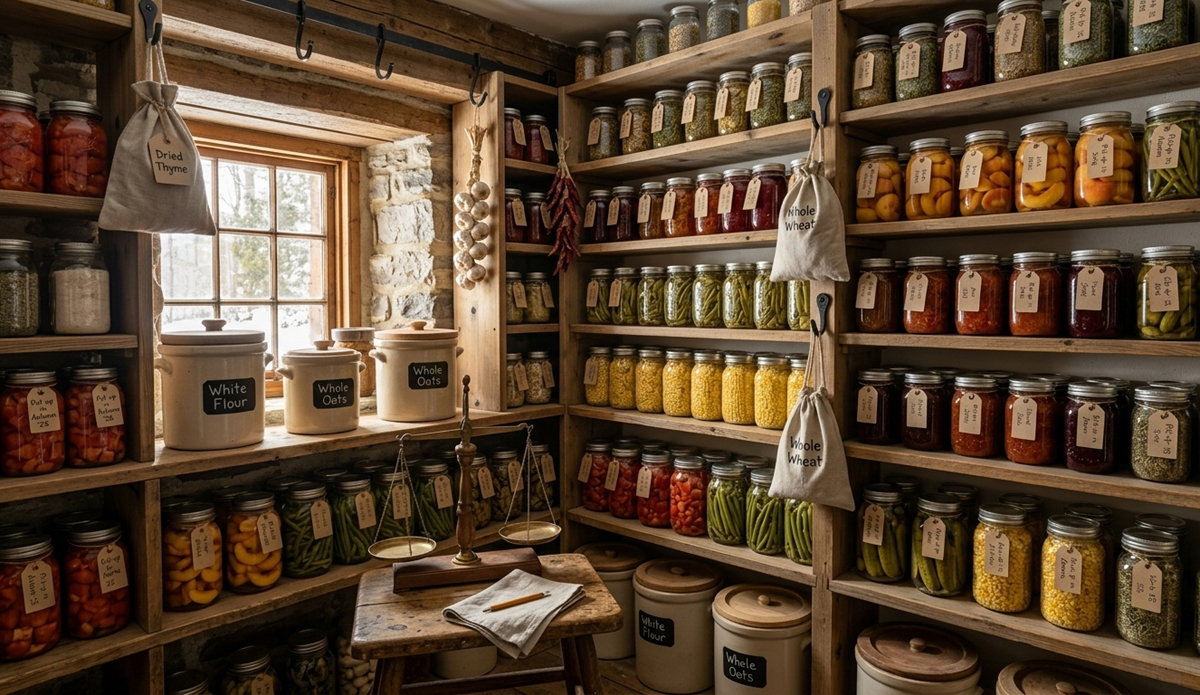
In the rhythm of pioneer life, the larder was never merely a “backup plan” for emergencies. It was the vital bridge between the seasons—a tangible record of the previous year’s hard work and the primary source of nourishment when the fields lay fallow.
A well-tended larder provides more than just food; it offers a profound sense of Sustenance Security. Whether the snow has blocked the lane or you are simply in the midst of a demanding planting season, a full larder ensures that your table remains a place of abundance and creativity.
Building a Foundation of Self-Sufficiency
A true heritage larder is built on versatility and longevity. Rather than stocking “meals in a box,” we focus on the basics of life, the raw ingredients that can be transformed into a hundred different dishes.
1. The Grain Store & Flour Bin
Stocking grains in their whole form ensures they last for years.
- The Staples: Hard red wheat for bread, oats for morning porridge, and long-grain rice.
- The Flour Bin: Keep stone-ground whole wheat and unbleached all-purpose flour in cool, dark crocks to maintain their vitality.
2. The Preservation Rows
Canned goods are the “captured sunshine” of the summer months.
- From the Orchard: Diced tomatoes, fruit butters, and applesauce.
- From the Field: Beans (dried or canned) are the cornerstone of the thrifty pantry, providing essential protein.
- From the Sea: Shelf-stable fish like salmon or tuna, which provide the healthy fats needed during the lean months.
3. The “Storehouse” Herbs & Fats
A pioneer cook knows that flavor is the key to preventing “pantry fatigue.”
The Fats: Jars of rendered lard, clarified butter (ghee), and cold-pressed oils. These are the life-blood of traditional cooking.
The Spice Box: Whole peppercorns, dried thyme, basil, and warming cinnamon.
Honoring the Harvest: The Larder Code
To prevent waste and ensure your family is always eating the freshest stores, we follow the ancient rule of honoring the harvest.
- The Rotation: When a new jar or bag is brought into the larder, it goes to the back. The oldest stores must always be at the front, ready for use.
- Marking the Season: Use a simple grease pencil or tie a linen tag around the neck of your jars to mark the Season of Preservation. Knowing a jar was “Put up in Autumn ’25” tells a story that a printed “Best By” date never could.
- The Bi-Monthly Review: Every six weeks, step into your larder with a candle or lantern, or flashlight. Touch every jar, check every seal, and identify which stores need to be featured in your upcoming meals.
The Thrifty Pantry: Sustenance from the Larder
A full larder removes the “what’s for dinner” worry. Here are four ways to create a feast using only your stored treasures:
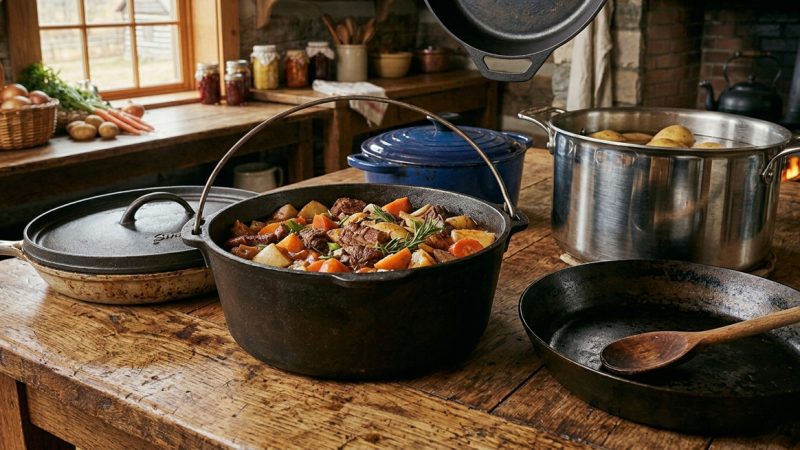
- The Shepherd’s Stew: A rich combination of canned beans, the last of the cellar carrots, and a jar of diced tomatoes, simmered long and slow.
- The Hearth Loaf: Using your stored flour and a pinch of salt to create a crusty bread that stretches a simple soup into a full meal.
- Larder Stir-Fry: Rehydrated dried mushrooms and frozen garden greens tossed with stored rice and a splash of homemade vinegar.
- Pantry Porridge: Rolled oats topped with the “Winter Store” of seeds and a spoonful of preserved fruit butter.
The Ultimate Satisfaction
There is a unique quietude that comes from standing in a room filled with the scent of dried herbs and the sight of orderly rows of glass jars. It is the satisfaction of knowing that, come what may, your family is provided for.
Embrace the journey of curating your larder. It is an act of love, a practice of thrift, and the ultimate expression of the simple life.
The author:
Pioneerthinking.com: Ingredients for a Simple Life. Insights from a seasoned professional rooted in country living, with 28 years of horticulture expertise and over two decades of practical experience in homesteading, natural beauty, natural health, cooking and creative living.
Photo. Gemini