Treats for Your Chickens
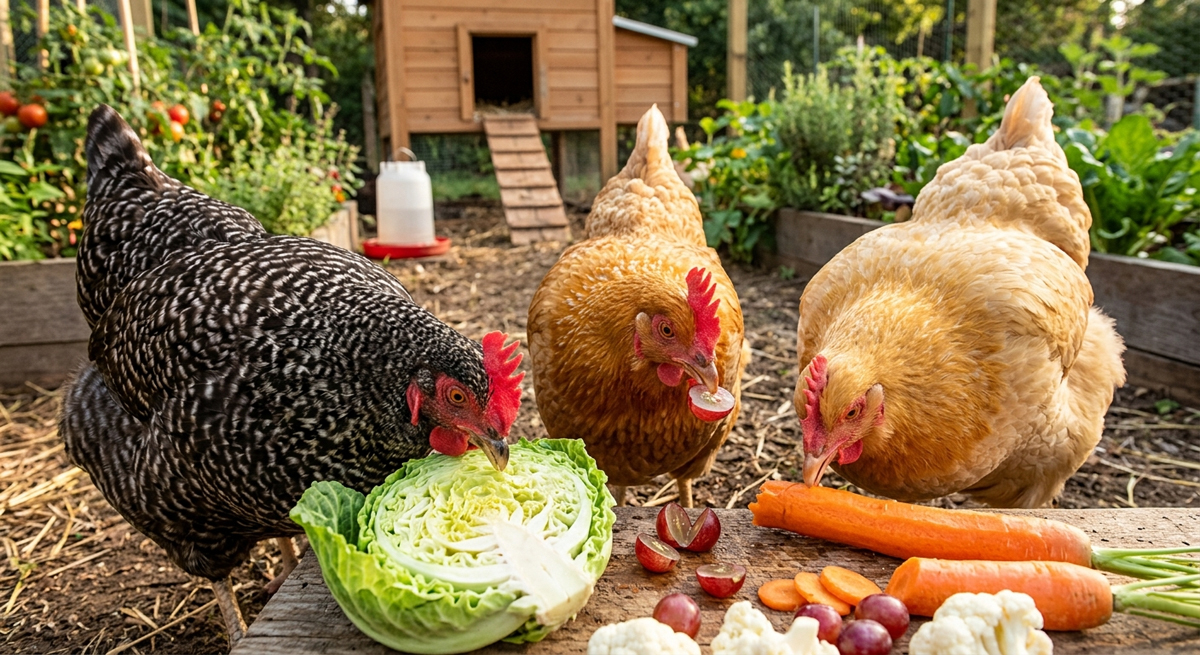
Just like you and me, chickens love having little treats to keep them happy and motivated to keep on fighting the good fight. So go out and buy your chickens a box of chocolates or maybe a nice big cake. Just kidding, your chickens’ treats are not the same as our treats. So instead of buying them candy and sweets, your chickens will love you when you give them some different vegetables and fruits. I will run down a little list of great treats you can give your chickens to keep them happy with you.
Apples – You can give this to them whole or in applesauce form. If you can spare a minute, cut out the core so they don’t eat the seeds. The seeds are not terrible for them, but they are not good for them either.
Bananas are another great treat that is filled with potassium and will help with your chickens’ muscles.
Broccoli and cauliflower are both great tasting and extremely healthy vegetables that your chickens will love. You can stick these in fences and let them pick at them.
Cabbage can be given to them whole and you can hang it from places to make them work for it.
Carrots, either raw or cooked, will be eaten up fast. They love carrots and will even eat the leaves so don’t worry about just tossing a couple in the coop.
Live crickets is a great treat if you enjoy watching your chickens run around. They are a nice source of protein and will get exercise chasing these around the yard.
Mature cucumbers are great treats and your chickens will love pecking at them when they are nice and soft.
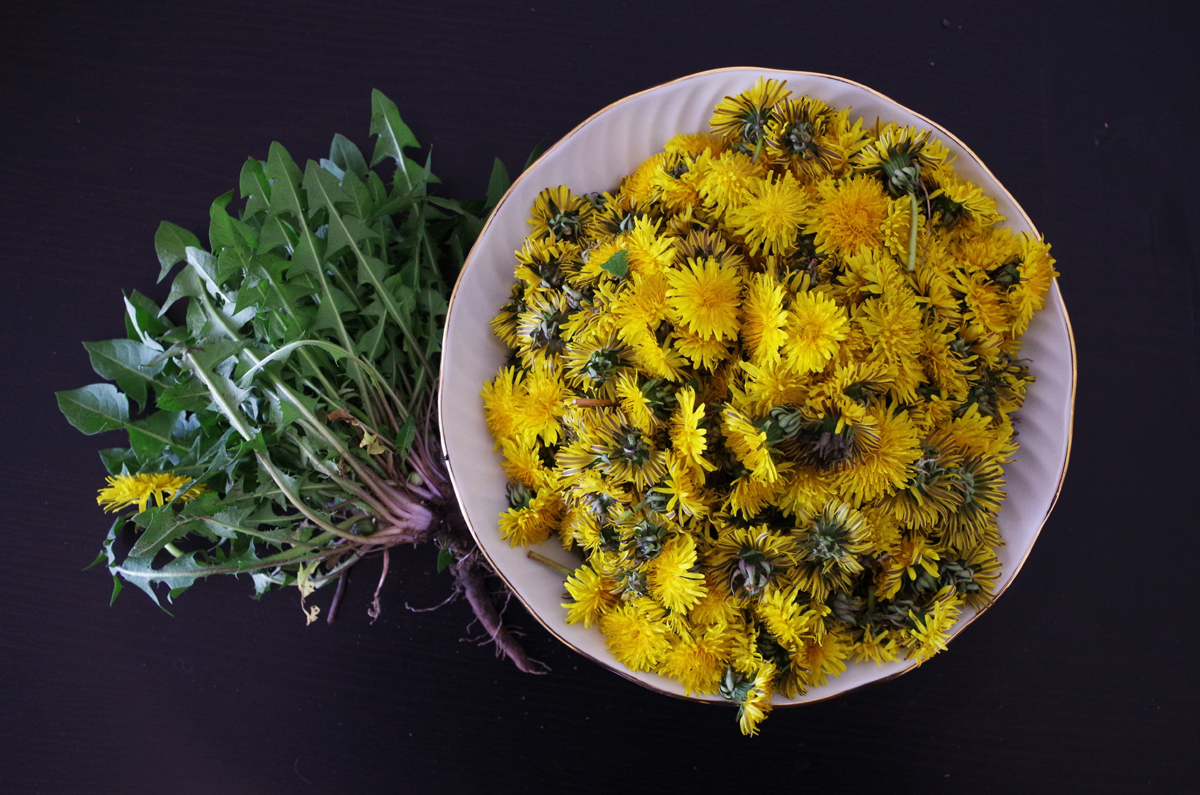
All natural flowers such as marigolds, pansies and nasturtiums. Make sure no chemical or pesticide has been used on the flowers.
Most fruits are fine for your chickens, the most used fruits are peaches, pears, grapes and cherries. As with most foods, make sure you cut up the grapes if you are giving them to baby chickens so they don’t choke.
Lastly, you can pretty much give them any leftovers from a meal you have just finished eating. Don’t give them spoiled food or moldy food as a way to get rid of it, give them food that you would still eat.
So make sure to keep your chickens happy by giving them occasionally treats. They will love you for it and will live happier and healthier lives.
The Author:
John Locke is an expert on chickens and everything related to chickens.
Photo. Gemini
Source: Ab
Feeding Chickens – Pioneer Style
by Pioneerthinking.com
Pioneers practiced a “nothing wasted” philosophy. Chicken feed was rarely “bought” in bags; it was a mix of what the land and kitchen provided:
-
Table Scraps: Every scrap of food—bits of bread, cheese, meat, and leftover vegetables—was saved. These were often boiled with water or buttermilk to create a warm, nourishing mash, especially in winter.
-
Garden Supplements: Vegetables were a staple when grass was unavailable. Cabbage, beets, and turnips were highly valued for winter storage, often hung up or split open for the chickens to peck at.
-
Grains: When farm-grown grains like corn, wheat, or oats were used, they were often cracked or ground to make them easier to digest.
-
Protein Sources: Beyond foraging for bugs, protein was supplemented with milk products (like skim milk or buttermilk), kitchen meat scraps, and occasionally even butchering leftovers, which helped keep the flock healthy and laying during the colder months.
- Foraging vs. Feed: Chickens were largely expected to “look after themselves” by free-ranging during the day, where they consumed insects, seeds, and greens from the farmyard and fields. This greatly reduced the need for expensive or hard-to-obtain supplemental grain.