Natural Dyes: Expert Tips for Vibrant, Long-Lasting Colors on Wool
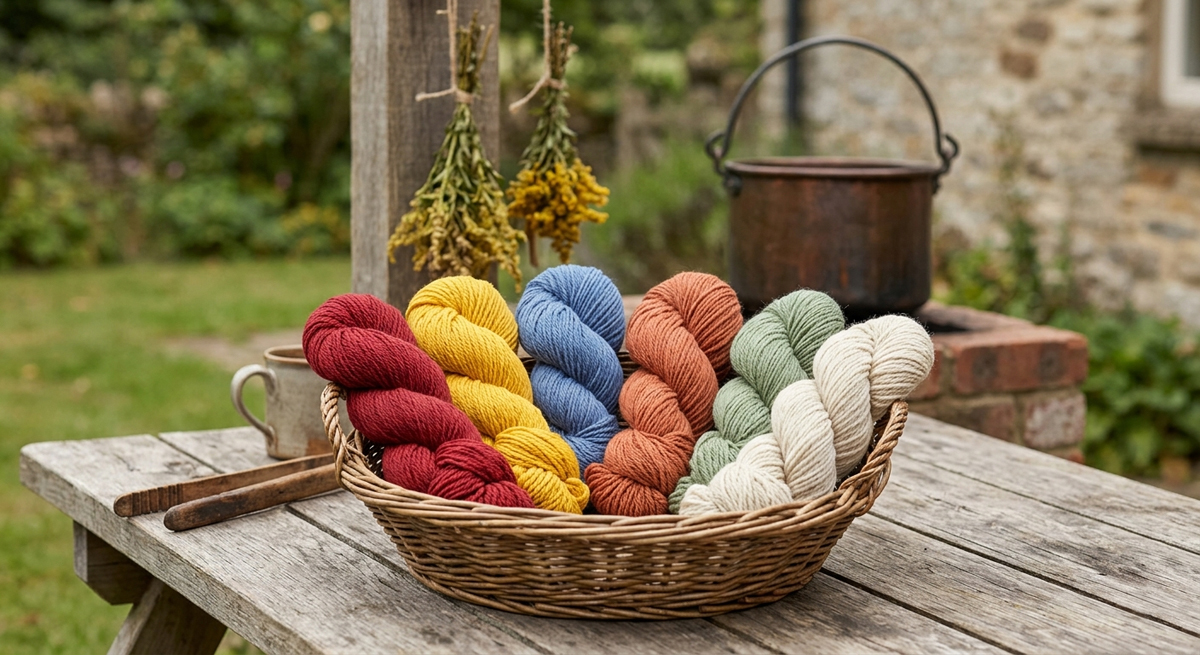
There is nothing quite like the magic of pulling a skein of wool out of a natural dye pot and seeing a rich, glowing hue that was sourced entirely from the earth. But if you have ever tried your hand at botanical dyeing, you might have experienced a common frustration: colors that look stunning in the pot, but rinse out into a dull, muddy gray or fade completely after a few weeks in the sun.
Achieving truly bright, lightfast (fade-resistant), and washfast colors on wool isn’t a matter of luck. It is a matter of science, patience, and a few trade secrets. By understanding how natural pigments bond with animal fibers, you can transform wild-harvested plants and kitchen scraps into a vibrant, permanent palette.
1. The Secret Starts with Scouring (Not Just Washing)
Many dyer’s mistakes happen before the wool ever touches the dye. Raw wool contains lanolin (natural sheep grease), and even commercially spun yarn often carries spinning oils. If these oils remain on the fiber, they act as a barrier, preventing both the mordant and the pigment from penetrating the wool core.
Regular dish soap or delicate laundry detergents won’t cut it. You must scour your wool.
-
The Method: Fill a large pot with hot water—around 140°F (60°C)—and add a dedicated heavy-duty grease cutter like Orvus Paste or Power Scour.
-
The Care: Submerge your wool gently. Never agitate or let cold water rush over hot wool, or the scales on the fibers will lock together, causing the wool to felt. Let it soak for 30 minutes, rinse at the same temperature, and let it dry.
2. Choosing the Right Mordant for Brightness
With very few exceptions (like indigo and walnut), most natural dyes are adjective dyes. This means they require a mordant—a mineral salt that acts as a chemical bridge, biting into the wool fiber on one side and locking onto the plant pigment on the other. Without a mordant, your colors will be faint and temporary.
For the brightest, truest colors, Alum (Potassium Aluminum Sulfate) is the gold standard. Unlike iron, which “saddens” or darkens colors into moody grays and olives, alum coaxes out the clearest, most luminous yellows, reds, and pinks.
| Mordant Component | Ratio per Weight of Fiber (WOF) | Purpose |
| Alum | 12% to 15% | Binds the dye and brightens the base color. |
| Cream of Tartar | 5% | An assistant that keeps wool soft and brightens reds/yellows. |
⚖️ The Weight of Fiber (WOF) Rule: Always weigh your wool while it is bone-dry. If you have 100 grams of dry wool, you will need 12 to 15 grams of alum and 5 grams of cream of tartar. Dissolve these completely in hot water before adding your wet, scoured wool, then simmer gently just below a boil (180°F / 82°C) for one hour.
3. Select High-Pigment Heirloom Dye Plants
Not all plants are created equal. While it is tempting to throw every colorful flower from the garden into a pot, many contain fugitive pigments (like berries and beets) that fade rapidly. To get bright, enduring colors, rely on the classic, historical champions of the dye garden:
-
Madder Root (Rubia tinctorum): The undisputed king of natural reds. Simmering madder roots below 190°F yields brick reds, rich terracottas, and deep corals. If the pot gets too hot, the duller brown pigments take over, so keep an eye on the temperature!
-
Weld (Reseda luteola): This unassuming heirloom herb produces the brightest, cleanest, most lightfast yellow known to the natural world.
-
Woad (Isatis tinctoria): A traditional biennial plant whose leaves contain indigo precursors, yielding beautiful, soft-to-deep heritage blues through a traditional fermentation vat process.
4. Master the Liquid-to-Fiber Proportion
To ensure the color is perfectly even and bright across the entire skein, you need room for the wool to float freely. A cramped pot causes uneven striking, resulting in patchy, splotchy yarn.
As a general rule, use at least 10 liters of water for every 100 grams of fiber. This gives the dissolved pigments ample space to circulate and bond uniformly to the wool’s protein structure.
The Pioneer View: The Wisdom of the Slow Dye Pot
To look at a vibrant skein of hand-dyed wool through a historical lens is to appreciate the true essence of self-reliance. To our ancestors, dyeing was not a weekend hobby or a craft kit bought at a store; it was a vital domestic art that brought warmth, beauty, and identity into a rugged, utilitarian life.
When a pioneer woman gathered goldenrod from the meadows, harvested madder from her kitchen garden, or carefully traded for a precious lump of alum, she was practicing a deep, seasonal patience. The brilliant colors she achieved were badges of honor—proof of her resourcefulness and her understanding of the natural world around her.
Those brilliant blues, fiery reds, and sun-soaked yellows were a deliberate defiance against the drab, exhausting winters of the homestead. By keeping these traditional methods alive, we don’t just create beautiful textiles; we preserve a profound connection to the land, honoring a time when color was harvested by hand and beauty was crafted entirely from scratch.
The Author:
Pioneerthinking.com: Ingredients for a Simple Life. Insights from a seasoned professional rooted in country living, with 28 years of horticulture expertise and over two decades of practical experience in homesteading, natural beauty and cosmetic creations, natural health, cooking and creative living.
Photo. Gemini