Pioneer Summer Days
During the summer, pioneers had to do far more than “enjoy the season.” It was the busiest time of year when nature provided just enough to make survival possible, and families worked relentlessly to turn that bounty into food, supplies, and shelter for the months when growing would be impossible.
In North America, summer months were dominated by intensive labor. Every household member had a role, because survival didn’t allow for idle time. The goal was simple: harvest what could be grown, gather what couldn’t, preserve everything that might spoil, repair what would fail in winter, and keep livestock alive and producing.
Agricultural Work 🌾
Summer was the peak season for farming, bringing long days of demanding fieldwork. Pioneer families cared for their crops from morning until evening—pulling weeds, watering when possible, and maintaining plantings that could include corn, wheat, oats, flax, potatoes, cabbage, and other vegetables. Once cleared land was ready, corn often became a key staple because it could reliably feed a family and support livestock.
But crops were only part of the challenge. As the season warmed, haymaking took over. Cutting, drying, and storing hay was essential—winter depended on it. Later in the summer, attention shifted again as grains such as wheat reached harvest time. Since mechanized tools weren’t available, harvesting was grueling work done by hand using sickles, scythes, or cradles, followed by threshing once the grain was ready.
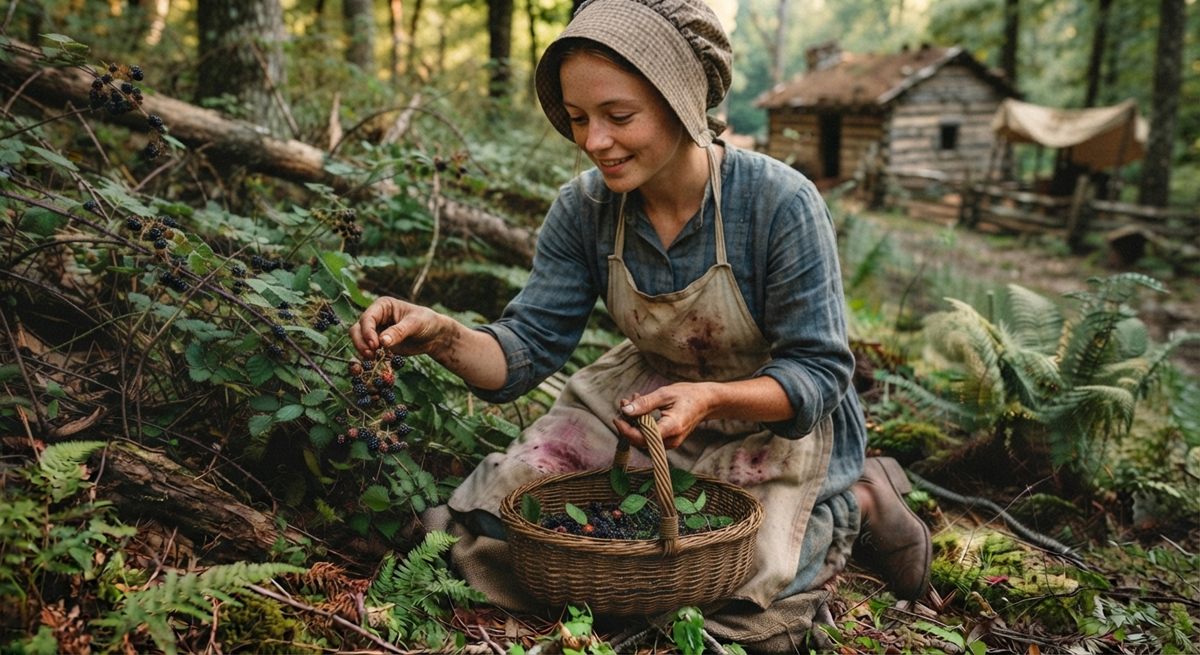
Even during busy farm days, many families made room for gathering wild food. The surrounding forests provided additional greens and fruits—especially berries such as blackberries and huckleberries. Other wild foods might include grapes, plums, cherries, and crab apples, helping stretch meals and add variety when garden harvests alone weren’t enough.
Food Preservation 🍎
Because refrigeration didn’t exist, preserving food wasn’t optional—it was survival. Spoilage in summer could mean hunger in winter, so people used every method they knew to keep harvests edible and safe.
Women and families often spent hours canning once canning jars became available, sealing garden produce for later use. Drying was also widespread, extending the life of fruits, vegetables, and some meats by removing moisture. For meats, salting and smoking were common ways to prevent spoilage and create food that could last through the cold season.
Some foods required practical storage solutions too. Milk and butter had to be kept cool, which might mean lowering containers into cool water near a well. Others relied on the naturally stable temperatures of root cellars or dug-out caves, where perishables could be stored away from freezing winters and summer heat.
Shelter and Infrastructure Maintenance 🏡
Summer’s weather made it the ideal time for repairs and upgrades around the homestead. Even if a cabin had been built earlier in the year, walls still needed attention—especially to keep out wind, rain, and drafts. Chinking log cabins with clay or mud helped seal gaps and improve weatherproofing before cold weather returned.
This was also when fences could be repaired, roofs patched, and tools maintained or replaced. As families expanded or established more permanent routines, summer provided the time to build larger homes or add essential outbuildings such as barns. Clearing land continued as well, opening up new spaces for crops and ensuring there would be firewood ready for winter.
Animal Care 🐄
Livestock was the backbone of pioneer life. Animals provided food, labor, and materials, so their care shaped the daily rhythm of summer.
Every day required feeding and watering, but seasonal moments made animal work especially important. Sheep were sheared in warm weather, producing wool that could later be spun into yarn and turned into clothing. Cows were milked regularly, supplying fresh milk and supporting the production of butter and cheese, both of which were vital for meals during colder months.
Summer wasn’t just about keeping animals alive—it was about preparing them to be productive long enough to get the family through winter.
Household Chores and Crafts 🧵
Outdoor work could be relentless, but the inside of the home still needed constant attention. Women and children helped keep the household running by processing raw materials into usable goods. Yarn was spun from wool or flax, fabric was woven, and clothes were sewn or repaired so families could keep warm when temperatures dropped.
Animal skins were also transformed into practical items such as trousers and moccasins. Seasonal household labor often included making soap and candles from animal fat, turning what might have been waste into everyday necessities.
Quilting served both practical and social purposes. It was a way to create warm bedcovers, and it also became a shared activity—one that brought neighbors together in the middle of heavy work. Meanwhile, regular duties like carrying water and gathering firewood never truly ended; they simply continued alongside everything else.
Social Life and Education 👨👩👧👦
Despite the nonstop labor, pioneer life still included community and small joys. Neighbors often organized “bees,” where multiple households teamed up to finish large projects faster—such as raising houses, building barns, clearing fields, or completing quilt sessions. These gatherings were productive, but they also provided something equally important: human connection and morale.
When work eased or weather forced everyone indoors, people found ways to relax. Simple amusements like picnics and dances offered a break from routine, and music from instruments such as fiddles or accordions brought energy to evening gatherings. Children created entertainment too, with homemade toys like rag dolls and corn husk dolls, along with games like hide-and-seek and hopscotch.
Evenings might end with shared comfort—reading, singing, or simply spending time together—so families could recover before the next day’s demands.
Pioneer summer life was a cycle of labor powered by necessity. Everything they did—from farming and foraging to preserving and repairing—was preparation for winter’s hardships, and it required the whole community to make it through.
The Author:
Pioneerthinking.com: Ingredients for a Simple Life. Insights from a seasoned professional rooted in country living, with 28 years of horticulture expertise and over two decades of practical experience in homesteading, natural beauty and cosmetic creations, natural health, cooking and creative living.