The Maker’s Mark: The Art of Labeling and Naming Heirloom Quilts
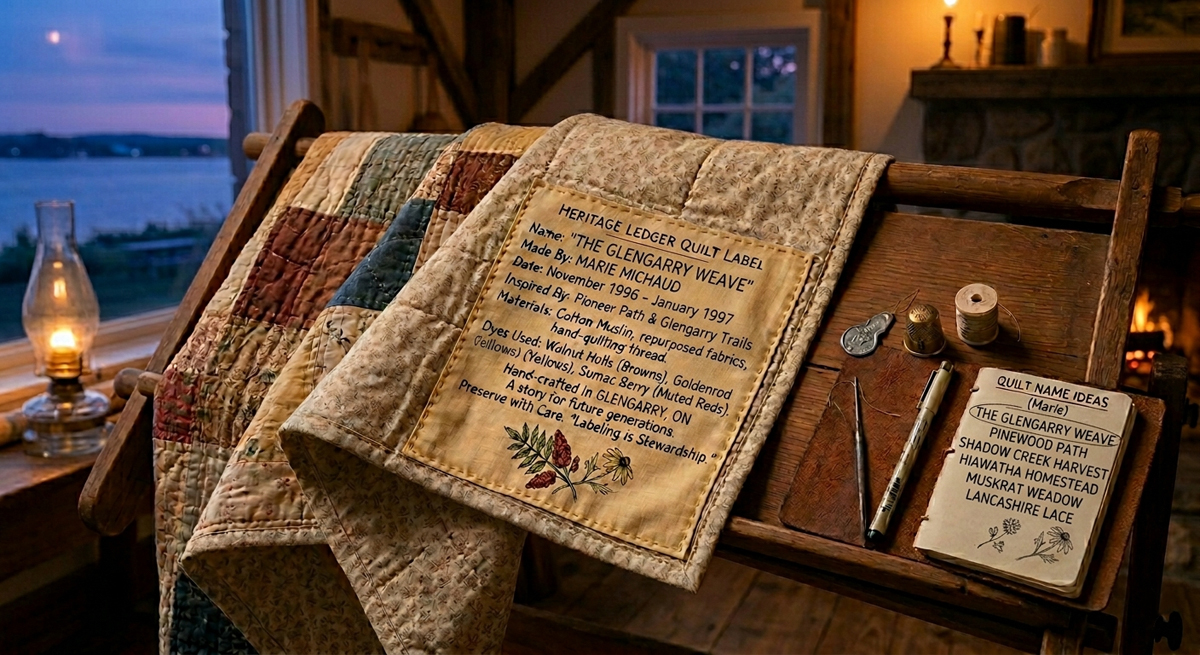
A quilt without a label is a story without a narrator. In the world of heritage craftsmanship, the completion of a project isn’t found at the final binding stitch; it is found when the maker’s mark is applied. Naming your quilt is a vital step in this process, as that name will likely remain forever. While many instructions focus on the “how-to” of construction, few address the “why” of the identity we give our creations.
1. Labeling as an Act of Stewardship
Every heirloom should serve as a historical document. Labeling transforms a functional object into a piece of recorded history, ensuring that future generations understand the origin and care of the textiles they inherit.
The Artisan’s Signature: Essential Records
Professional quality is defined by the details. To maintain the integrity of a textile record, a label should be clear, permanent, and informative:
-
The Maker’s Identity: Use a full name rather than a nickname to allow future historians or family members to accurately identify the artisan.
-
The Chronology: Always include the month and year of completion.
-
The Context: Note the inspiration, the recipient (e.g., “Made for…”), or a special message.
-
Technical Fiber Notes: Mentioning the use of specific plant fibers or Botanical Dyes (such as Alder or Black-eyed Susan) provides vital information for safe cleaning and conservation.
2. The Power of a Name
The name of your quilt has immense value. It moves the work from a generic category into a specific legacy. Consider the purpose and the “spark” you wish to create:
-
Purpose: Is it for sale, a gift, or in memory of a loved one?
-
Reference: Does it honor a special person, place, pet, or activity?
-
Sensory Connection: Are you trying to evoke memories, seasons, or even the “sixth sense” of spiritual connection?
Example: A quilt named “My Conversations at Tea Time” immediately implants a visual cue. Whether the viewer is a tea drinker or not, the name reinforces the image of shared warmth and community, ensuring the quilt remains in their memory long after they’ve seen it.
3. The Botanical Connection: A Horticultural Label
Bridging the gap between the garden and the workroom creates a cohesive “Heritage” aesthetic.
-
Hand-Dyed Fabrics: Use linen or cotton scraps dyed with garden-sourced pigments like Goldenrod or Walnut for a natural canvas.
-
Botanical Illustrations: Use permanent pigment pens to sketch a small sprig of the plant that inspired the quilt’s palette. A simple rendering of Rosemary or Lavender adds a sophisticated, professional touch.
4. 10 Meaningful Naming Themes
If you are struggling to move past “the thing” and find a name with gravity, consider these themes:
-
The Harvest Moon: For textiles featuring deep oranges, golds, and ochres.
-
The Solstice Hearth: For heavy, high-loft quilts intended for mid-winter insulation.
-
Wildflower Meadow: Ideal for scrap quilts or intricate botanical prints.
-
The First Seedling: A traditional name for pieces created for new arrivals.
-
Pioneer Path: For geometric, historical patterns like the Log Cabin or Ohio Star.
-
Garden Secrets: For work featuring hidden details or intricate “stitch-in-the-ditch” patterns.
-
The Heritage Oak: Symbolizing the longevity and structural strength of the work.
-
Fireside Echoes: For pieces utilizing repurposed or “waste-not” materials.
-
Larder & Linen: A name for utility pieces designed for the heart of the home.
-
The Weaver’s Knot: For quilts that incorporate woven elements or complex textures.
5. The Pioneer View: Naming as an Act of Survival
For the pioneers crossing the vast prairies or settling in isolated homesteads, a quilt was a vital shield and a portable piece of home. In the pioneer lifestyle, naming a quilt was an act of grounding oneself in an unpredictable world.
In a sod house or a log cabin, labeling was an assertion of identity. A “Friendship Quilt” signed by neighbors served as a “paperless” address book of loved ones left behind. To a pioneer, a label was a historical record in an era before digital photos. A name like “Prairie Sunset” captured a specific moment of beauty amidst hardship.
Legacy Stewardship: The act of labeling is a testament to the value of hand-crafted work. By recording the process today, you provide a roadmap for the future—ensuring the story of your craft remains intact for generations to come.
The Author:
Pioneerthinking.com: Ingredients for a Simple Life. Insights from a seasoned professional rooted in country living, with 28 years of horticulture expertise and over two decades of practical experience in homesteading, natural beauty and cosmetic creations, natural health, cooking and creative living.
Photo. Gemini