Re-Use Those Plastic Knitting Needles
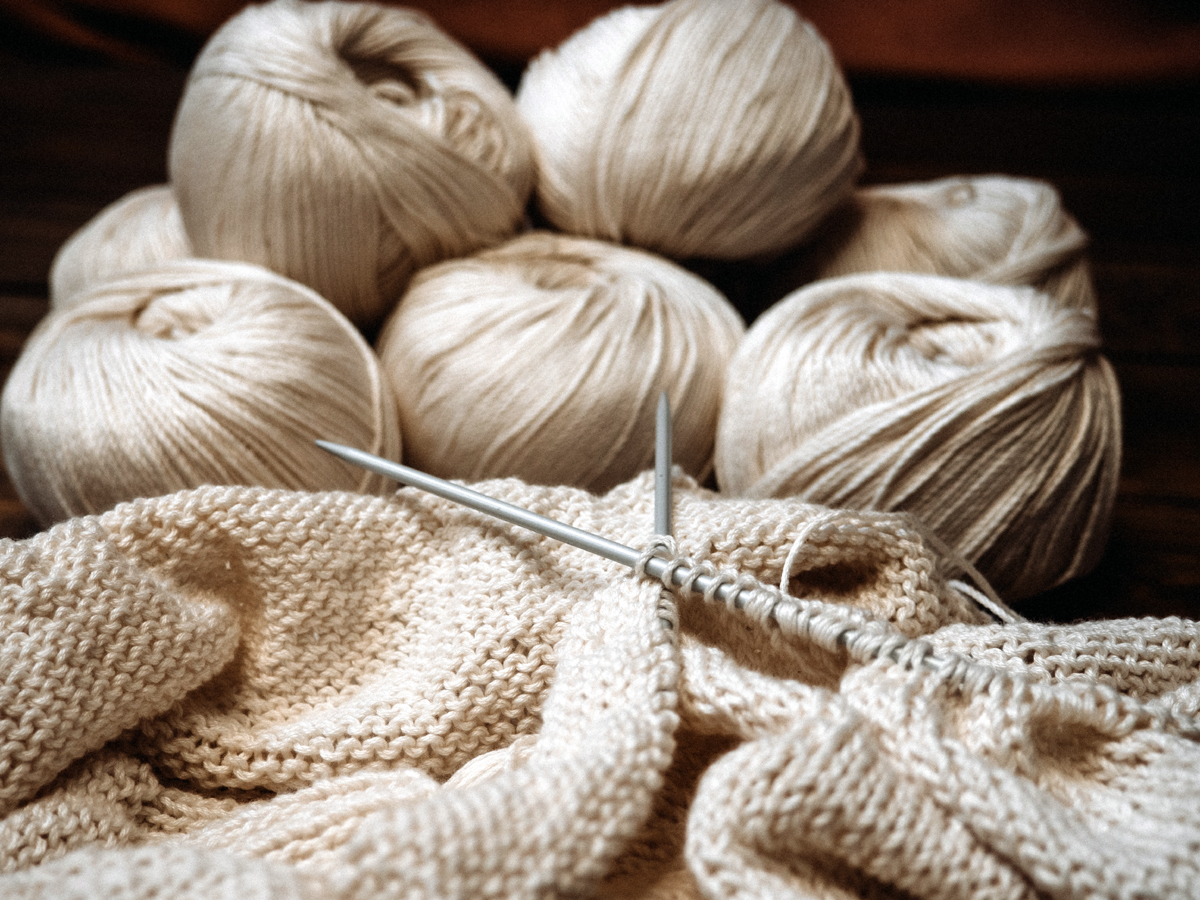
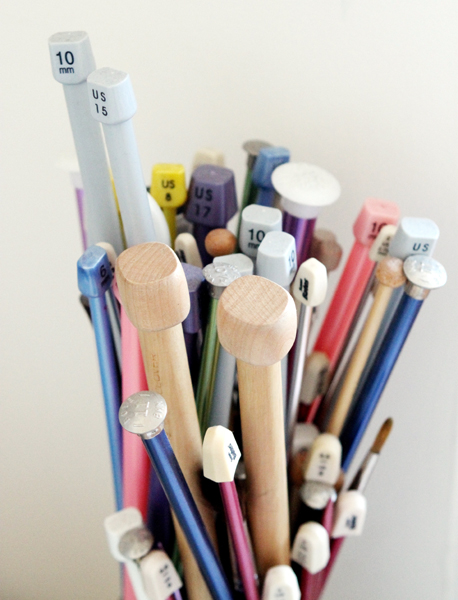
If you’ve inherited your grandmother’s plastic knitting needles, here’s how you can repurpose them.
In the kitchen use them as chopsticks when you make Chinese food or having sushi.
When making your own candy floss use them as the stick to twirl the candy floss on. (We don’t want to use them on heat or in a fire as they have a risk of melting so we’ll stick to re-using them with minimal heat involved.)
If you always entertain or have large parties use them as mixers in pitchers or beverage dispensers. make sure they colour-coordinate well with matching fruit and ice cubes.
Cover the sharp end with old cloth and use them to clean hard-to-reach nooks and crannies, like between the grooves of fans, air vents and heaters.
Use the plastic knitting needles as pegs in the ground when mounting a tent outside. It goes deeper in the ground and is great for extra reinforcement.
They make great skewers so use them to hold pieces of fruit at your next party. They will add some colour to your fruit table and go well with dips.
Get some large beads and make your own abacus. Stake them in the ground with the beads on it and leave them outside for the kids to play with. Make sure you secure them safely.
Glue wooden boards on them to use as sign boards in the garden. Kids can also use it as a pitch in the ground to show where they last planted their seeds.
Make DIY flags or little texture books for babies by cutting up old jeans, old t-shirts into squares or use any other textured fabric. Sew a little hem on the side so they fit sturdy over the plastic knitting needle. Fill them up with three or four different textured fabric. Use them as a paint canvas for the kids or a sensory booklet for a baby.Secure the sharp end with a corkscrew.
Melt them (by boiling in a pot of hot water) and once they are soft quickly mould them into hangers for your dolls clothing. Start with shaping the bottom of the hanger, leave a straight piece of about 10cm exactly in the middle and bend the two ends into an upward curve. Connect the two ends on top and twist around each other. Ensure there’s a piece left to make the hook for hanging.
A plastic knitting needle can serve as a sturdy foundation when making your own table top ornaments. Just stick them through a gardener’s oasis or any foam base and mount your flowers on it. You can even stack fruits, vegetables or Christmas tree decorations into a triangular Christmas tree shape if you like.
When you go camping the light outside your tent is always limited at night. Fix this by sticking a knitting needle into a thick pillar candle. Make sure it’s in there good. At camp you can peg these into the ground and light the candles. Enough of these candles will ensure sufficient lighting around your camp site.
What else do you use your plastic knitting needles for?
The Author:
I’m pleased to research new and innovative ways to re-use or up-cycle the old and mundane. Whether it be in the kitchen, crafting or just anything around the house. Thank you for reading, Kashiefah Chetty )
Photo. Gemini
Source: EA
The Pioneer Mindset
by pioneerthinking.com
For the pioneer, a knitting needle was far more than a hobby tool; it was a precision instrument of survival. On the frontier, metal and refined wood were precious, and a long, straight, tapered rod of steel or bone was a versatile asset in the “Work-Basket.”
Beyond the obvious task of creating socks, mittens, and sweaters to ward off “Sod House” winters, here is how a pioneer would have utilized their knitting needles in daily life:
1. The Heritage Kitchen: Testing and Turning
In a kitchen without modern thermometers or specialized utensils, the thin, heat-conductive needle was a constant companion to the hearth.
-
The “Cake Tester”: Long before disposable toothpicks, a clean knitting needle was the standard for checking if a heavy rye loaf or a honey cake was done in the center.
-
Turning Delicate Fritters: A thin needle was the perfect tool for flipping small “hoe cakes” or fried dough in a cast-iron skillet without tearing the fragile edges.
-
Skewering for the Smokehouse: Smaller needles could be used to pierce tough rinds of salt pork or bacon to thread the twine used for hanging meat in the smokehouse.
2. Maintenance and Repair: The “Pioneer Stylus”
The tapered point and rigid body made the needle an ideal “poker” for mechanical issues around the homestead.
-
Clearing Oil Lamps: Carbon buildup often clogged the delicate mechanisms of whale oil or kerosene lamps. A fine knitting needle was the only tool thin enough to clear the soot without breaking the glass or bending the wick holder.
-
The Darning Aide: When repairing heavy work boots or leather harness straps, a blunt knitting needle was used as a “spacer” to keep stitch tension even or to poke out trapped debris from a seam.
-
Cleaning the Spinning Wheel: Dust and lanolin from raw wool would often “gum up” the orifice of a spinning wheel. A needle was used to fish out the fiber clogs that fingers couldn’t reach.
3. Horticulture and Foraging: Precision in the Dirt
As a horticulturist, I recognize the needle as the original “micro-tool” for the early gardener.
-
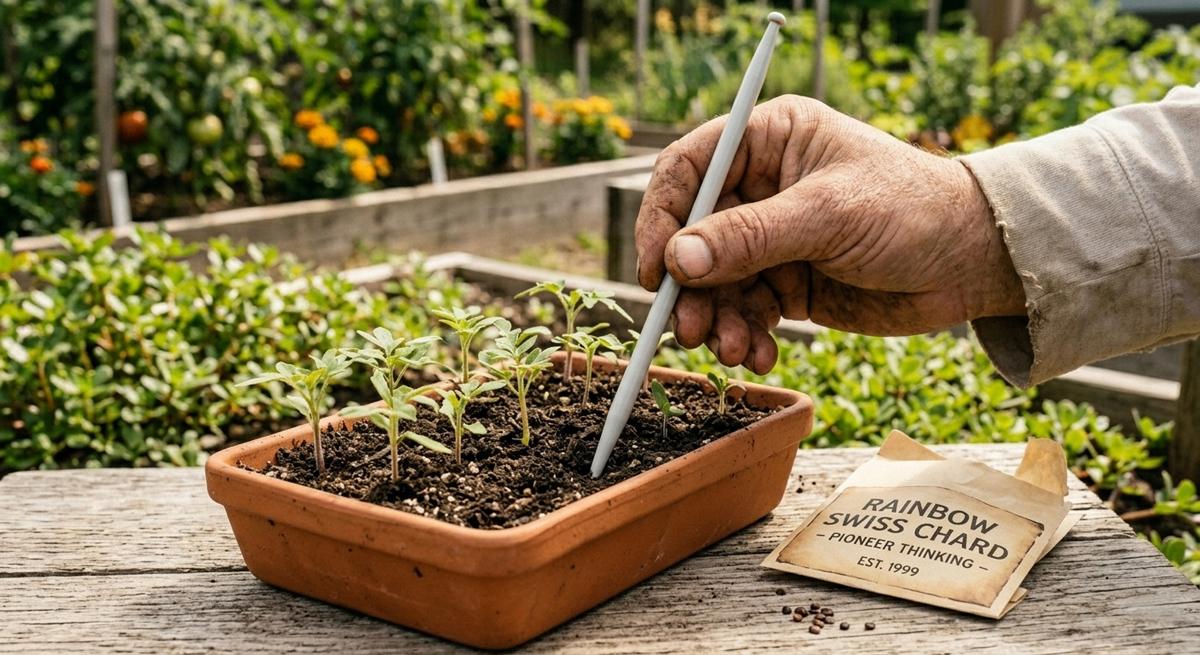
Measuring Seed Depth: Pioneers knew that planting a seed too deep was a death sentence for a crop. They would often mark their needles with small notches to use as a literal “depth gauge” in the soil.
-
Lifting Delicate Seedlings: When thinning out “starts” in a window box, a needle was used to gently pry up a single seedling by the root without disturbing the neighbors—a technique we still use today for “pricking out” plants.
4. The “Make-Do” Emergency Tool
-
The Temporary Hairpin: If a woman’s wooden hair fork snapped while working in the fields, a knitting needle was the immediate substitute to keep hair safely tucked under a sunbonnet and away from farm machinery.
-
The Splint: In a pinch, two or three needles bundled together with a strip of calico fabric provided a rigid, lightweight splint for a broken finger or a small livestock limb.