Crafting the Authentic Red-Heel Sock Monkey
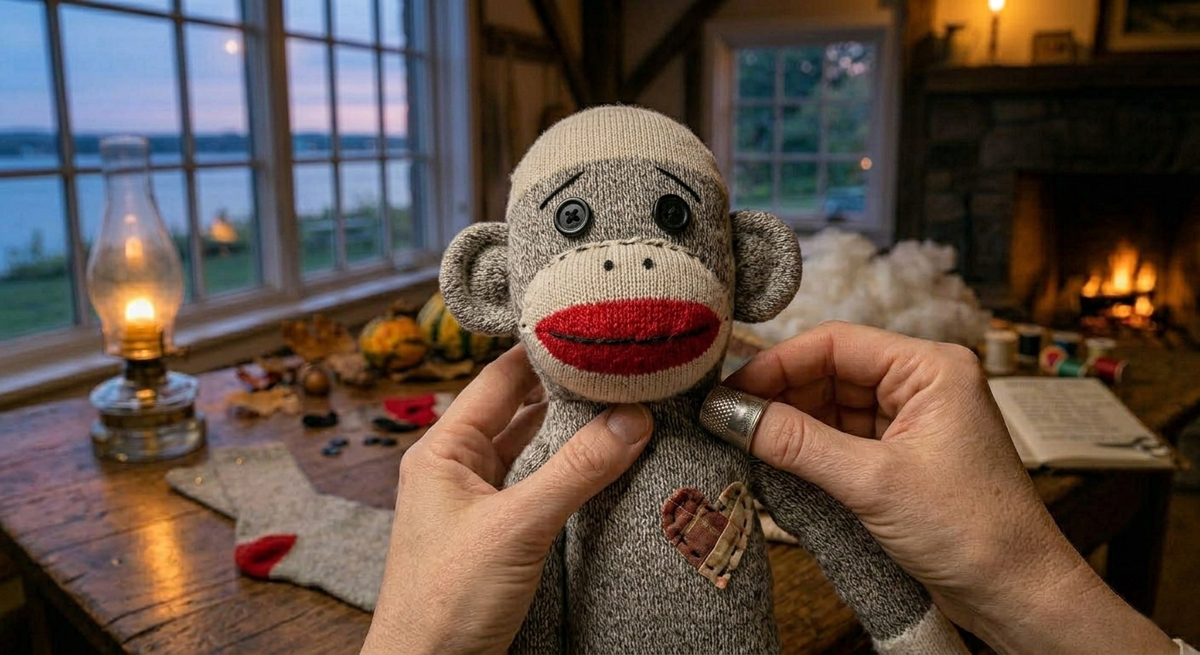
A sock monkey is more than a whimsical toy; it is a 20th-century testament to the “waste-not” philosophy. While its origins lie in the lean years of the 1930s rather than the 1800s, the spirit is purely pioneer. It represents the artisan’s ability to see potential in the mundane—transforming a pair of utilitarian work socks into a cherished heirloom.
To create an authentic sock monkey is to participate in a lineage of resourceful crafting. It requires no complex machinery, only the steady hand of a maker and the iconic Rockford Red Heel sock.
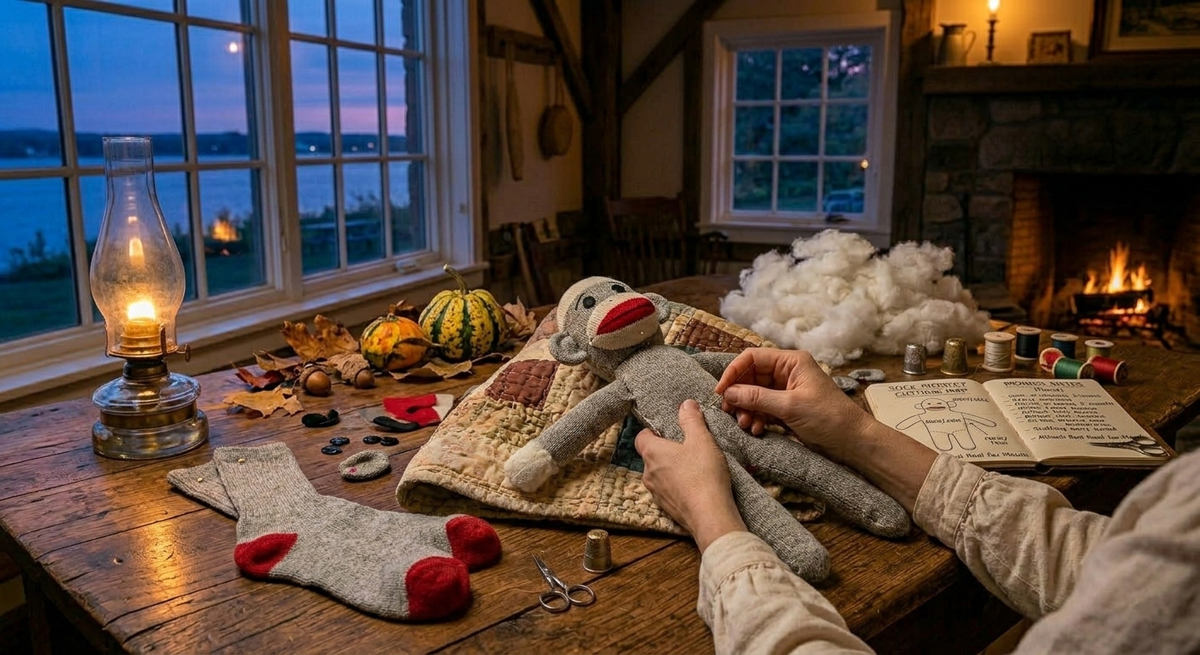
1. The Raw Materials: Selecting Your Fibers
The integrity of your monkey begins with the sock. For a truly professional, “heritage” feel, avoid synthetic, thin novelty socks.
-
The Original: Use Fox River Mills (the original Nelson Knitting Company successors) Red Heel socks.
-
Fiber Choice: Opt for the cotton/wool/nylon blend. The slight texture of the wool gives the monkey a sturdy, vintage structure that holds its shape for decades.
-
The Thread: Use a heavy-duty Carpet or Button Thread for attaching the limbs. These toys are meant to be loved, and a double-lock stitch ensures the “narrator” of this story stays intact.
2. The Cutting Map: A Study in Geometry
In heritage crafting, precision in the “breakdown” of materials is key. You will use one pair of socks (size Large is traditional for a standard monkey).
Sock A: The Body and Foundation
-
The Legs: Lay the sock flat with the heel facing up. Cut from the top of the cuff down the center, stopping exactly 1.5 inches before the red heel.
-
The Turn: This creates the torso and legs in one seamless piece. The red heel becomes the “seat” of the monkey.
Sock B: The Features and Limbs
This sock is sacrificed for the details.
-
The Arms: Cut from the remaining cuff/leg area.
-
The Tail: A long, slender strip cut from the remaining leg material.
-
The Mouth (The Soul): Carefully cut out the red heel from the second sock, leaving a ¼-inch border of the natural-colored fabric for turning under.
-
The Ears: Small semi-circles cut from the remaining toe or scrap areas.
3. The Artisan’s Technique: Professional Assembly
The Sculptural Stuffing
Do not simply “stuff” the monkey. You are sculpting it. Use small tufts of high-loft batting, starting at the toes and working upward. Ensure the “neck” is firm; a floppy-headed monkey is the mark of a rushed project.
The Heritage “Mouth”
The mouth is the most critical feature.
-
Placement: Center the red heel between the eyes.
-
The Secret: Stuff the mouth after you have sewn three-quarters of the way around it. This creates the “pout” that gives the monkey its personality.
-
The Embroidery: Use a traditional Stem Stitch or Split Stitch in black embroidery floss to define the grin and the nostrils.
The Eyes: Safety vs. Tradition
-
For the Collector: Use classic black buttons.
-
For the Heirloom: For a toy intended for a child, replace buttons with Satin-Stitched eyes. This removes the choking hazard while maintaining the handmade aesthetic.
4. Legacy Stewardship: The Maker’s Mark
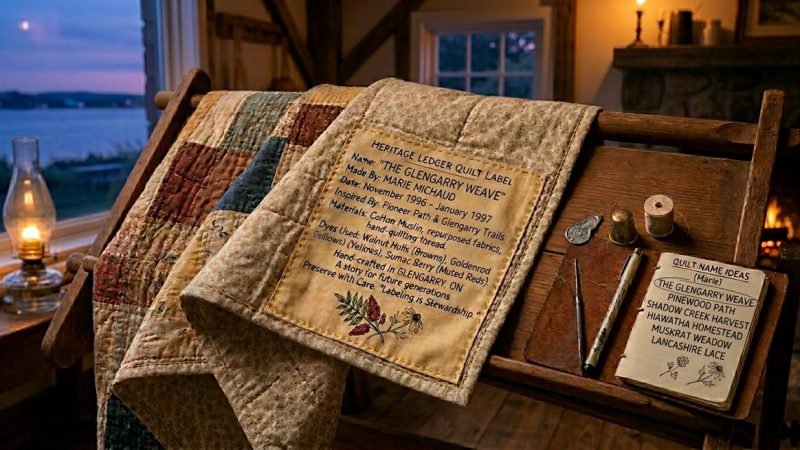
Following our philosophy of labeling as stewardship, no sock monkey is complete without its provenance.
Artisan Tip: Instead of a separate fabric label, embroider your initials and the year (e.g., M.M. 1996) directly into the sole of the monkey’s foot.
By taking the time to name your creation—perhaps “Hearthside Companion”—you move it from a craft project to a historical document. You are proving that even a pair of work socks can be a vessel for art, memory, and home.
The Author:
Pioneerthinking.com: Ingredients for a Simple Life. Insights from a seasoned professional rooted in country living, with 28 years of horticulture expertise and over two decades of practical experience in homesteading, natural beauty and cosmetic creations, natural health, cooking and creative living.
Photo. Gemini